

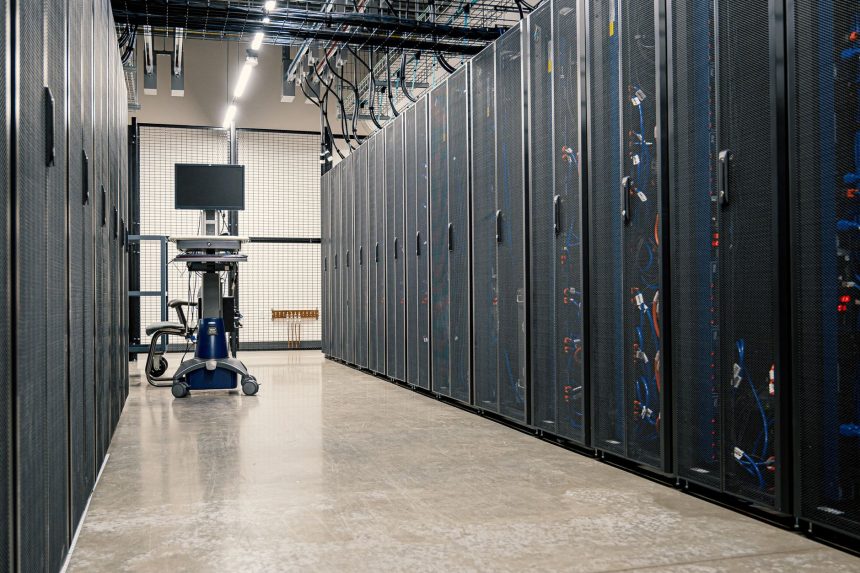
Brazil’s policy to attract data centers has entered a decisive phase after President Luiz Inácio Lula da Silva sanctioned Law No. 15,504 on September 15, 2026. Published in the Official Gazette the following day, the law establishes the Special Tax Regime for Data Center Services, known as Redata, and creates incentives for the installation and expansion of facilities supporting cloud computing and artificial intelligence.
The program is designed to strengthen Brazil’s digital infrastructure and encourage new investments in data processing. However, its practical implementation still depends on regulations covering key issues such as eligible low-emission energy sources, the importation of equipment and the monitoring of commitments required from participating companies.
According to the Ministry of Finance, Redata combines tax incentives with obligations intended to generate benefits for Brazil’s technology sector and domestic economy. The government’s challenge now is to define how those requirements will be applied and how compliance will be verified.
What Redata requires from companies
Companies covered by the regime must make at least 10% of their processing, storage and data-handling capacity available to the domestic market. The law also establishes requirements related to research and development investments in Brazil, the use of renewable or low-emission energy sources and water-efficiency standards.
Projects located in Brazil’s North, Northeast and Central-West regions may receive a 20% reduction in two of those obligations, according to the government’s presentation of the program. The regional provision is intended to encourage investment beyond the country’s main technology and business centers, although its effects will depend on the final regulatory framework and on the ability of public agencies to supervise the commitments.
The Ministry of Development, Industry, Foreign Trade and Services said the policy seeks to use Brazil’s renewable energy potential and submarine cable infrastructure to attract data-related investments. The ministry also stated that approximately 60% of Brazil’s digital workloads are processed outside the country, a situation the government presents as an opportunity to expand domestic capacity.
Regulation remains central to the program
The law’s sanction does not by itself settle all the conditions needed for Redata to operate fully. A report published by Folha de S.Paulo on September 28, 2026, reported that the program was still awaiting federal definitions on energy and equipment imports.
Those decisions are particularly relevant because data centers require continuous electricity and sophisticated equipment. The rules on eligible energy sources will determine how companies can demonstrate compliance with the low-emission requirement. Import regulations, meanwhile, may influence the cost and timing of projects while the country seeks to expand its computing, cloud and artificial intelligence infrastructure.
Another unresolved issue is oversight. The government will need to establish how companies report the capacity made available to the domestic market, how research and development investments are measured and what happens when environmental or operational obligations are not met. The sources provided for the policy do not detail the final inspection procedures, leaving regulation as an important next step.
Investment promise faces environmental and economic scrutiny
Supporters of Redata argue that expanding data centers could reduce Brazil’s dependence on digital services hosted abroad, improve the country’s position in the artificial intelligence economy and stimulate the development of local technology. The policy also seeks to connect infrastructure investment with research and development, potentially creating links between companies, universities and Brazilian suppliers.
At the same time, the incentives raise questions about the fiscal cost of attracting projects and about whether the expected technological gains will be proportional to the public benefits granted. Data centers consume significant amounts of electricity and water, making environmental criteria and local resource availability central to the debate.
Organizations cited by Agência Brasil, including Coalizão Direitos na Rede, the Brazilian Consumer Defense Institute and the Network for Digital Sovereignty, have criticized the way the proposal was conducted. They have called for greater transparency, stronger technological commitments and social and environmental safeguards.
The debate therefore extends beyond the attraction of private capital. Redata will test whether Brazil can use tax policy to build domestic digital capacity while ensuring that infrastructure expansion does not intensify pressure on energy and water resources or concentrate the market among the largest technology companies.
What comes next for Brazil’s data center strategy
The immediate priority is the publication of the rules that will give operational meaning to the law. Until then, investors, technology companies and public authorities will have to wait for greater clarity on eligible energy sources, imported equipment and compliance procedures.
Redata places Brazil at the intersection of industrial policy, digital sovereignty, artificial intelligence and sustainability. Its results will depend not only on the volume of investment attracted, but also on whether the program delivers domestic capacity, research activity and measurable public benefits in exchange for the tax incentives.