

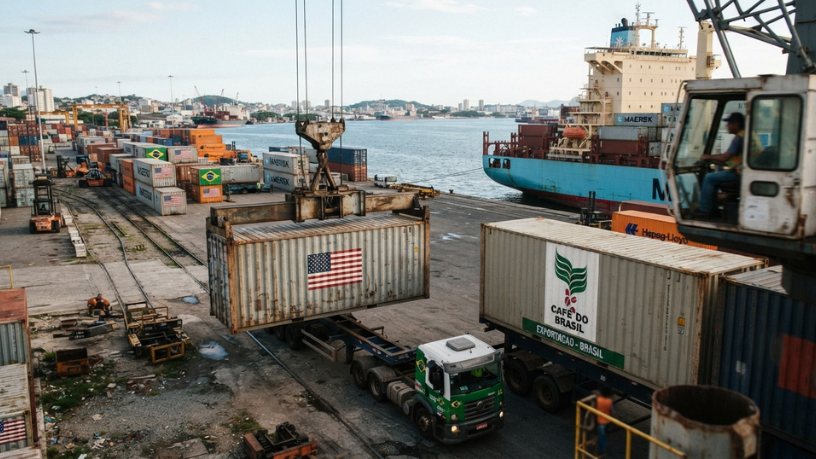
New trade measures are reshaping business decisions on both sides of the Americas, with potential consequences for companies, consumers, and investors.
The latest developments in U.S.-Brazil trade have become one of the most closely watched business stories of the past week. While diplomatic tensions between Washington and Brasília have attracted headlines, the underlying economic issue is the new wave of tariffs imposed by the United States on selected Brazilian imports. For American companies, the measures are part of the Trump administration’s broader trade strategy. For Brazilian exporters, however, they introduce new costs, uncertainty, and questions about future access to one of Brazil’s largest foreign markets.
The topic extends far beyond government negotiations. Manufacturers, agribusiness companies, logistics providers, retailers, and investors are all evaluating how these tariffs could affect supply chains and pricing. Brazilian businesses that depend heavily on U.S. buyers may face higher barriers, while American importers must decide whether to absorb additional costs, seek alternative suppliers, or pass increases on to consumers.
For Brazilian readers following U.S. business news, one question stands out: what do these tariffs actually mean for companies operating between the two countries? Understanding the latest developments helps explain why exchange rates, export industries, and bilateral trade remain central to the economic relationship between Latin America’s largest economy and the United States.
Why the latest U.S. tariffs are drawing attention from businesses
The Trump administration’s latest trade actions build on investigations conducted under Section 301 of the U.S. Trade Act. According to the Office of the United States Trade Representative (USTR), Washington concluded that several Brazilian trade and regulatory practices unfairly restrict American commerce. As a result, selected Brazilian products became subject to an additional 25% tariff beginning in late July, while separate measures addressing forced-labor compliance introduced additional duties of up to 12.5% on certain imports.
These decisions affect more than political relations. Businesses operating internationally rely on predictable costs, and tariffs can significantly change the economics of importing goods. American companies purchasing Brazilian products—including industrial materials, machinery, footwear, furniture, ethanol, and agricultural goods—must now calculate whether continuing imports remains financially attractive. Some firms may renegotiate contracts, while others could diversify suppliers or adjust pricing strategies to offset the new duties.
For Brazil, the United States remains one of its most valuable export destinations. Although not every product is affected, the Brazilian government estimates that the combined U.S. measures directly impact approximately 23.1% of Brazilian exports to the American market, while more than half of exports remain outside the scope of the additional tariffs. That distinction is important because the overall bilateral trade relationship continues despite the new restrictions, even as specific industries experience greater pressure.
What this means for Brazilian exporters and American companies
Brazilian exporters now face a more competitive environment when selling into the U.S. market. Higher tariffs generally make imported products more expensive for American buyers, reducing price competitiveness compared with domestic alternatives or suppliers from countries facing lower import duties. Export-oriented sectors with strong exposure to the United States may therefore experience slower sales growth if buyers shift purchasing decisions elsewhere.
At the same time, American businesses are not necessarily celebrating the new measures. Many U.S. importers depend on established Brazilian suppliers that have spent years building reliable production networks. Replacing those relationships often requires new contracts, quality verification, regulatory approvals, and logistical adjustments. Even when alternative suppliers exist, switching rarely happens overnight, creating additional operational costs throughout the supply chain. Recent reporting suggests many American businesses have become more resilient after several years of tariff-related disruptions, although higher costs remain an important concern.
The effects may also extend to consumers. If companies absorb only part of the increased import costs, prices for finished products could gradually rise. Although the impact varies by industry and product category, tariffs frequently influence retail pricing because import duties become part of overall production and distribution expenses. Investors are therefore watching whether companies can maintain profit margins without significantly reducing demand.
Could the dispute reshape U.S.-Brazil trade relations?
Trade disputes rarely end with the announcement of tariffs. Governments often continue negotiations, businesses adjust commercial strategies, and legal challenges can influence future outcomes. Brazil has already sought consultations through the World Trade Organization, arguing that the new American measures are inconsistent with international trade rules. That process may take considerable time, but it demonstrates that the dispute has moved beyond bilateral political discussions into formal international trade procedures.
Another factor is the broader diplomatic relationship between Washington and Brasília. Recent tensions—including disputes involving diplomatic appointments and visas—have contributed to a more complicated political environment. Although trade policy officially focuses on commercial issues, diplomatic relations often influence the pace and tone of future negotiations between governments.
For businesses on both sides of the Americas, the priority remains stability. American companies seek predictable supply chains, while Brazilian exporters want continued access to one of the world’s largest consumer markets. Whether through negotiation, legal review, or future policy adjustments, both governments face pressure from industries that benefit from strong bilateral commerce.
The coming months will therefore be critical. Companies will continue monitoring tariff implementation, evaluating costs, and adapting investment decisions as new information becomes available. For Brazilian readers following U.S. business developments, this is more than a diplomatic story—it is a reminder that decisions made in Washington can directly influence exports, exchange rates, employment, and business opportunities throughout Brazil. As trade policy evolves, understanding these connections will remain essential for entrepreneurs, investors, and anyone interested in the future of one of the Western Hemisphere’s most important economic partnerships.
Sources:
- Office of the United States Trade Representative (USTR) – Informações oficiais sobre as tarifas e ações comerciais dos EUA contra o Brasil.
- Ministério do Desenvolvimento, Indústria, Comércio e Serviços (MDIC) – Governo do Brasil – Dados sobre o impacto das tarifas americanas nas exportações brasileiras.
- Reuters – Cobertura da evolução da disputa comercial e diplomática entre Estados Unidos e Brasil.
- U.S. Census Bureau – Foreign Trade – Estatísticas oficiais sobre o comércio bilateral entre Estados Unidos e Brasil.
- U.S. Department of Commerce – International Trade Administration (ITA) – Dados sobre relações comerciais, exportações e investimentos.
- World Trade Organization (WTO) – Informações sobre disputas comerciais e regras do comércio internacional.
- Federal Reserve (Fed) – Indicadores econômicos que ajudam a contextualizar os impactos das políticas comerciais na economia americana.
- The Guardian – Reportagem sobre o impacto das tarifas para empresas americanas.