

By using this site, you agree to the Privacy Policy and Terms of Use.
Accept
EUA press EUA press EUA press
  • Home
  • Technology
    TechnologyShow More
    Mão humana interagindo com uma mão robótica sobre um teclado, em meio a conexões digitais
    U.S. and Russia clash with treaty push over lethal autonomous weapons
    November 16, 2026
    Braço robótico ao lado de máquinas em uma moderna instalação de manufatura industrial.
    White House Targets Robotics and Industrial Machinery Imports in New Trade Move
    October 30, 2026
    Técnico aprimora um modelo odontológico impresso em 3D em um laboratório.
    Brazil expands digital denture production across public health system
    October 9, 2026
    Protótipo de aeronave elétrica eVTOL com hélices exposto em ambiente interno.
    Brazil prepares rules and infrastructure for electric eVTOL aircraft
    October 5, 2026
    Gabinetes metálicos com servidores, equipamentos de rede e cabos em um data center moderno.
    Brazil’s Redata Enters Decisive Phase as Government Defines Data Center Rules
    October 2, 2026
  • News
    NewsShow More
    Fachada frontal da Suprema Corte dos Estados Unidos, em Washington, sob céu azul e com nuvens.
    Supreme Court to Examine Trump Order Restricting Asylum at Southern Border
    November 20, 2026
    Jean Pierre Lessa e Santos Ferreira
    Do AI Workloads Need the Same Infrastructure as a Regular System?
    November 19, 2026
    Criança recebe uma vacina aplicada por um profissional de saúde em ambiente interno.
    U.S. Measles Transmission Returns After Surge in 2026 Cases
    November 19, 2026
    Fachada da Suprema Corte dos Estados Unidos em Washington, D.C., com colunas neoclássicas.
    Supreme Court Takes Up Trump Order Restricting Asylum at Southern Border
    November 18, 2026
    Navio porta-contêineres da Evergreen sendo carregado no Porto de Baltimore, nos Estados Unidos.
    A Democratic Congress could challenge Trump’s Brazil tariffs, but reversal may take time
    November 17, 2026
  • Business
    BusinessShow More
    Torre de controle de um aeroporto diante de um céu azul.
    Trump Air Travel Overhaul Faces Congressional Scrutiny Over $50 Billion Cost
    November 23, 2026
    Navio-tanque navegando em águas calmas durante o crepúsculo.
    Russian Diesel Tanker Rerouted Toward Brazil as U.S. Import Plan Faces Legal Uncertainty
    November 11, 2026
    Equipe diversa de trabalhadores colaborando em um moderno ambiente de call center.
    September Job Openings Signal Continued Resilience in the U.S. Labor Market
    November 5, 2026
    Composição de papel com cédulas de dólar entre moedas, ações financeiras e um gráfico curvo.
    U.S. Economy Accelerates to 3.4% Growth in Third Quarter
    November 2, 2026
    Fource Consultoria
    A Solid Company, a Confusing Presentation: Fource Consultoria Perspective
    October 30, 2026
  • About Us
Reading: Trump Air Travel Overhaul Faces Congressional Scrutiny Over $50 Billion Cost
Share
Font ResizerAa
EUA press EUA press
Font ResizerAa
  • Home
  • Technology
  • News
  • Business
  • About Us
  • Home
  • Technology
  • News
  • Business
  • About Us

Home » Trump Air Travel Overhaul Faces Congressional Scrutiny Over $50 Billion Cost

Business

Trump Air Travel Overhaul Faces Congressional Scrutiny Over $50 Billion Cost

Ensaio EUA Imprensa
Ensaio EUA Imprensa
November 23, 2026
Share
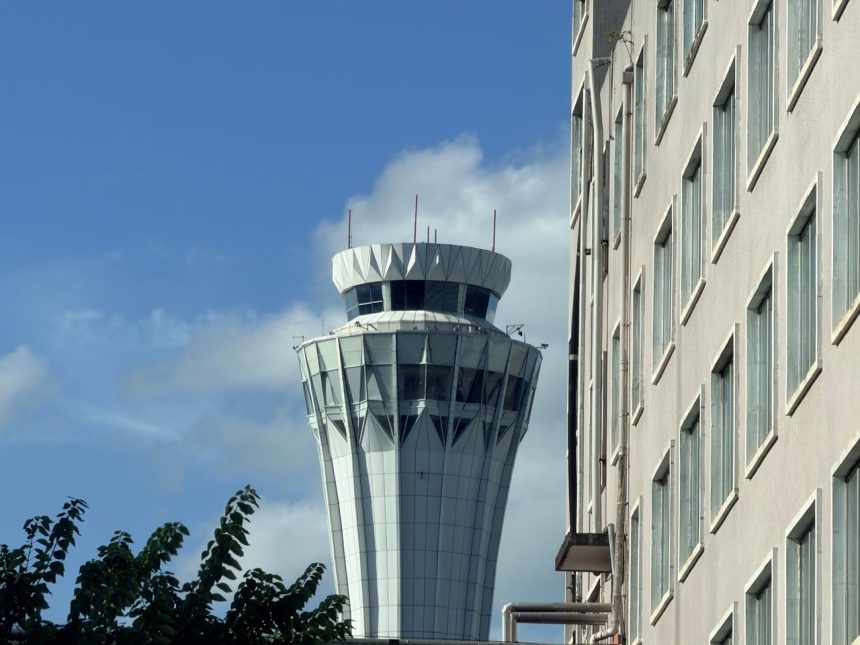
Torre de controle de um aeroporto diante de um céu azul.
SHARE

The Trump administration’s proposal to modernize the United States air travel system is facing scrutiny in Congress, where lawmakers are questioning the cost, oversight and execution of a program valued at up to $50 billion. The plan would target equipment, communications networks, air traffic control systems and other infrastructure used to coordinate flights across the country.

Contents
Why the modernization plan has become a national issueCongress questions cost and implementationWhat the proposal could mean for Brazilian travelersA debate between urgency and oversight

The debate comes as the reliability of the nation’s aviation infrastructure has drawn renewed attention after recent operational disruptions and concerns involving equipment used in air traffic control. According to The Associated Press, congressional members have expressed skepticism about how the initiative would be managed and whether its projected cost is matched by clear results.

Why the modernization plan has become a national issue

Air traffic control depends on a network of communications, monitoring equipment and operational systems that must work continuously to organize aircraft movements. When part of that infrastructure becomes outdated or unreliable, the effects can extend beyond a single airport, affecting schedules, airline operations and the movement of passengers and cargo.

Government officials supporting the proposal argue that a broad modernization effort is needed to replace aging technology and strengthen the systems used to manage flights. The program is also presented as a way to improve operational reliability, reduce delays and support safer coordination of air traffic throughout the United States.

For Congress, however, the size of the proposed investment raises questions about accountability. Lawmakers are examining how the money would be allocated, which agencies and contractors would oversee the work, and how the government would measure whether the upgrades deliver the promised improvements. The disagreement reflects a broader tension between the urgency of repairing national infrastructure and the need for strict control of public spending.

Congress questions cost and implementation

The proposal has not been described as a fully approved or completely financed program. Instead, it remains part of a political and legislative discussion over the future of the U.S. aviation system. That distinction is important because the administration’s request and congressional review represent different stages of the process.

Members of Congress are weighing whether the plan provides enough detail about its timeline, priorities and supervision. They are also assessing the risks of undertaking a large-scale technology replacement across a system that supports commercial flights, cargo operations and international connections.

The discussion is likely to remain focused not only on the total price but also on the structure of the initiative. Replacing equipment and communications systems requires coordination among federal authorities, airports, airlines and technology suppliers. Any interruption during the transition could create additional operational challenges, making planning and oversight central issues in the congressional debate.

What the proposal could mean for Brazilian travelers

Changes to the U.S. air traffic system could matter to Brazilian passengers who travel to the United States for tourism, study, work or business. Airports in Miami, Orlando, New York and Atlanta are important entry points and connecting locations for travelers from Brazil, although the proposal concerns the national aviation infrastructure rather than a specific city.

A more modern control network could affect the reliability and capacity of flights connecting Brazil with the United States. It could also influence routes that use American airports as links to other destinations in North America, Europe and Asia. For airlines and passengers, the practical interest lies in whether the investment improves the flow of aircraft and reduces disruptions across the broader network.

The economic effects would extend beyond travelers. Airlines depend on predictable schedules to manage aircraft, crews and connections, while companies use air cargo networks to move goods across borders. Delays and operational failures can therefore create costs for businesses as well as for passengers.

A debate between urgency and oversight

The congressional response shows that there is support for addressing weaknesses in the U.S. aviation infrastructure, but not necessarily agreement on the administration’s proposed approach. The central question is how to modernize a nationwide system without leaving the public with an expensive program that lacks measurable goals or effective supervision.

As lawmakers examine the proposal, the future of the initiative will depend on decisions about funding, governance and implementation. For now, the $50 billion figure represents the scale sought by Trump administration officials, while Congress continues to question the details behind the plan and the results it would be expected to deliver.


Share This Article
Facebook Email Print
Previous Article Fachada frontal da Suprema Corte dos Estados Unidos, em Washington, sob céu azul e com nuvens. Supreme Court to Examine Trump Order Restricting Asylum at Southern Border
Fachada frontal da Suprema Corte dos Estados Unidos, em Washington, sob céu azul e com nuvens.
Supreme Court to Examine Trump Order Restricting Asylum at Southern Border
News
Jean Pierre Lessa e Santos Ferreira
Do AI Workloads Need the Same Infrastructure as a Regular System?
News
Criança recebe uma vacina aplicada por um profissional de saúde em ambiente interno.
U.S. Measles Transmission Returns After Surge in 2026 Cases
News
Fachada da Suprema Corte dos Estados Unidos em Washington, D.C., com colunas neoclássicas.
Supreme Court Takes Up Trump Order Restricting Asylum at Southern Border
News

Euapress: Your daily dose of global news, delivered straight to your inbox. Stay informed on the latest events shaping our world.

Equipe diversa de trabalhadores colaborando em um moderno ambiente de call center.
September Job Openings Signal Continued Resilience in the U.S. Labor Market
Business
Design decisions shape thermal comfort and influence real estate value through performance and efficiency. Alex Nabuco Dos Santos highlights how smart planning reduces cooling costs.
How Do Design Decisions Impact Thermal Comfort in the Real Estate Market?
News
EUApress - [email protected]
Welcome Back!

Sign in to your account

Username or Email Address
Password

Lost your password?