
The United States has lost its status as a country free from endemic measles transmission after recording the highest annual number of cases since 1991. The development marks a significant setback for public health and creates new concerns for families, schools, health services and people traveling between the United States and Brazil.
According to a report by The Associated Press, the country had already surpassed five thousand confirmed measles cases in 2026. The outbreak has been associated with declining vaccination coverage and the spread of misinformation about immunization.
The loss of the designation was highlighted by the Pan American Health Organization, which recognized that the United States no longer met the conditions associated with the elimination of endemic measles transmission. The decision expands concern across the Americas because sustained circulation of the virus in one country can affect regional public health efforts.
What the loss of measles-free status means
A country is considered to have lost measles elimination status when chains of transmission continue for at least twelve months. The designation does not mean that every community in the United States is experiencing an outbreak or that the virus is spreading at the same level nationwide. It indicates that transmission has persisted long enough to represent a sustained public health problem.
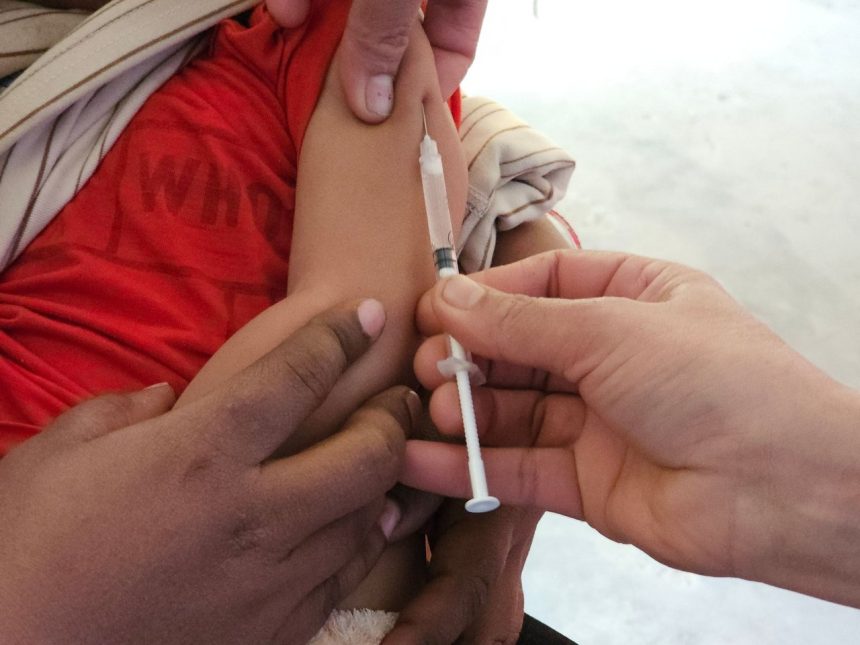
Measles is highly contagious, making vaccination coverage a central element in preventing new chains of infection. When fewer people are protected, the virus has more opportunities to move through communities, particularly in settings where children and families gather. The 2026 surge therefore reflects not only the number of reported infections but also the broader difficulty of maintaining population protection.
The Associated Press connected the increase to falling vaccination coverage and misinformation about immunization. Those factors have complicated the response by weakening confidence in vaccination and making it more difficult for health authorities to prevent transmission before outbreaks grow.
Why the development matters to Brazilians
The change is relevant to Brazilians who live in the United States, as well as to people who travel there for tourism, work, study or family visits. Brazilian families with children may need to pay closer attention to vaccination guidance issued for international travel and to instructions from health authorities, schools and medical providers in the communities where they live.
The issue also has a direct cross-border dimension. People move frequently between Brazil and the United States, and the circulation of a highly contagious virus can increase concern for travelers and families in both countries. The regional dimension is one reason the development has drawn attention from the Pan American Health Organization, as reported by the Associated Press.
For travelers, the loss of elimination status is a reminder that measles protection should be considered before an international trip. Vaccination recommendations may depend on a person’s age, health history, destination and travel circumstances. Families should rely on guidance from health professionals and official health authorities when reviewing their immunization status.
Pressure on schools and health services
The return of sustained measles transmission can affect schools, childcare settings and local health services. Children are especially important in the public health response because schools bring large numbers of people together and can become central locations for identifying possible exposure and interrupting transmission.
Health services may also face additional demands when suspected cases require evaluation, testing, vaccination reviews or public health follow-up. The response depends on recognizing infections, identifying people who may have been exposed and maintaining strong protection in the wider community.
The episode is not only a dispute over political positions. It is an epidemiological change with practical consequences for families and institutions. The combination of a highly contagious virus, reduced vaccination coverage and misinformation has created conditions for transmission to continue in the United States.
A regional public health warning
The United States’ loss of measles-free status shows how quickly progress against a preventable disease can be reversed when protection declines. The record set in 2026, with cases exceeding five thousand and reaching the highest annual level since 1991, gives the development national importance beyond the communities where infections were first detected.
For Brazilian readers, the central message is practical: measles transmission in the United States can affect residents, visitors and families connected to both countries. Health guidance for travel and routine vaccination remains especially relevant while authorities address the outbreak and work to stop sustained transmission.