

By using this site, you agree to the Privacy Policy and Terms of Use.
Accept
EUA press EUA press EUA press
  • Home
  • Technology
    TechnologyShow More
    Mão humana interagindo com uma mão robótica sobre um teclado, em meio a conexões digitais
    U.S. and Russia clash with treaty push over lethal autonomous weapons
    November 16, 2026
    Braço robótico ao lado de máquinas em uma moderna instalação de manufatura industrial.
    White House Targets Robotics and Industrial Machinery Imports in New Trade Move
    October 30, 2026
    Técnico aprimora um modelo odontológico impresso em 3D em um laboratório.
    Brazil expands digital denture production across public health system
    October 9, 2026
    Protótipo de aeronave elétrica eVTOL com hélices exposto em ambiente interno.
    Brazil prepares rules and infrastructure for electric eVTOL aircraft
    October 5, 2026
    Gabinetes metálicos com servidores, equipamentos de rede e cabos em um data center moderno.
    Brazil’s Redata Enters Decisive Phase as Government Defines Data Center Rules
    October 2, 2026
  • News
    NewsShow More
    Fachada frontal da Suprema Corte dos Estados Unidos, em Washington, sob céu azul e com nuvens.
    Supreme Court to Examine Trump Order Restricting Asylum at Southern Border
    November 20, 2026
    Jean Pierre Lessa e Santos Ferreira
    Do AI Workloads Need the Same Infrastructure as a Regular System?
    November 19, 2026
    Criança recebe uma vacina aplicada por um profissional de saúde em ambiente interno.
    U.S. Measles Transmission Returns After Surge in 2026 Cases
    November 19, 2026
    Fachada da Suprema Corte dos Estados Unidos em Washington, D.C., com colunas neoclássicas.
    Supreme Court Takes Up Trump Order Restricting Asylum at Southern Border
    November 18, 2026
    Navio porta-contêineres da Evergreen sendo carregado no Porto de Baltimore, nos Estados Unidos.
    A Democratic Congress could challenge Trump’s Brazil tariffs, but reversal may take time
    November 17, 2026
  • Business
    BusinessShow More
    Navio-tanque navegando em águas calmas durante o crepúsculo.
    Russian Diesel Tanker Rerouted Toward Brazil as U.S. Import Plan Faces Legal Uncertainty
    November 11, 2026
    Equipe diversa de trabalhadores colaborando em um moderno ambiente de call center.
    September Job Openings Signal Continued Resilience in the U.S. Labor Market
    November 5, 2026
    Composição de papel com cédulas de dólar entre moedas, ações financeiras e um gráfico curvo.
    U.S. Economy Accelerates to 3.4% Growth in Third Quarter
    November 2, 2026
    Fource Consultoria
    A Solid Company, a Confusing Presentation: Fource Consultoria Perspective
    October 30, 2026
    Exterior do Federal Reserve em Washington, visto de baixo, com bandeiras dos Estados Unidos e uma escadaria.
    October Fed Meeting Brings U.S. Rates and Brazil’s Dollar Outlook Into Focus
    October 29, 2026
  • About Us
Reading: Supreme Court to Examine Trump Order Restricting Asylum at Southern Border
Share
Font ResizerAa
EUA press EUA press
Font ResizerAa
  • Home
  • Technology
  • News
  • Business
  • About Us
  • Home
  • Technology
  • News
  • Business
  • About Us

Home » Supreme Court to Examine Trump Order Restricting Asylum at Southern Border

News

Supreme Court to Examine Trump Order Restricting Asylum at Southern Border

Ensaio EUA Imprensa
Ensaio EUA Imprensa
November 20, 2026
Share
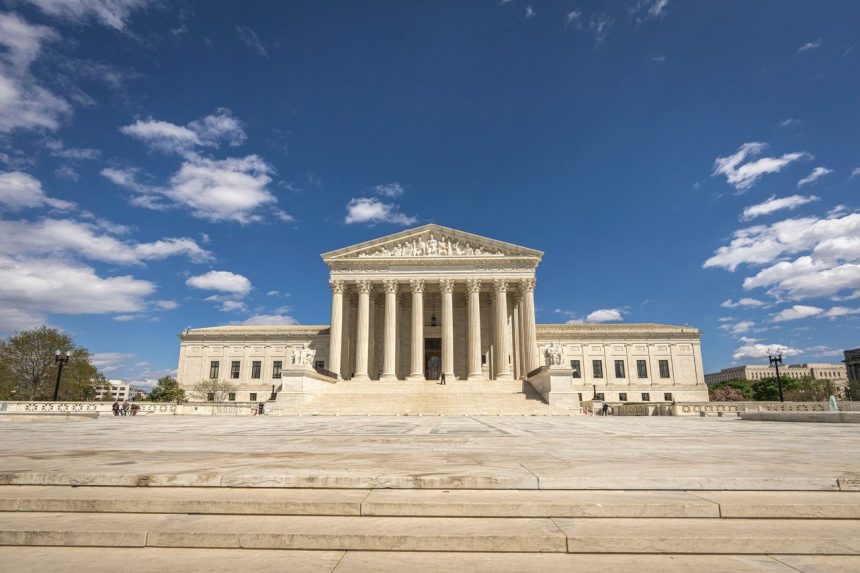
Fachada frontal da Suprema Corte dos Estados Unidos, em Washington, sob céu azul e com nuvens.
SHARE

The U.S. Supreme Court will review the legality of an executive order issued by President Donald Trump that suspends or restricts access to asylum at the country’s southern border. The case places one of the administration’s central immigration measures before the nation’s highest court and could define the limits of presidential authority over the protection system.

Contents
What the Supreme Court will decideWhy the case matters for immigration policyPossible effects for Brazilians

According to the Associated Press, the justices will examine whether the president can use an executive order to prevent or limit people from presenting asylum claims after arriving at the southern border. The review comes amid broader immigration restrictions adopted by the Trump administration, including policies involving deportation and the return of people encountered at the border.

Asylum is a form of protection sought by people who say they face persecution, torture or another serious danger in their countries of origin. The dispute is therefore not limited to the management of border crossings. It also concerns whether the executive branch can block access to a legal process designed to evaluate claims for protection under U.S. law and international standards.

What the Supreme Court will decide

The central question is how much authority the president has to suspend access to the asylum system through executive action. The administration argues that the order is necessary to control the border and manage migration flows. The government’s position gives priority to its power to respond to what it considers an operational and security challenge at the southern border.

Immigrant rights organizations challenging the policy argue that the measure can prevent people from submitting protection claims provided for under American law. In their view, restricting access at the border may stop asylum seekers from having their individual circumstances considered through the established process.

The Supreme Court’s review will place those competing arguments within a constitutional dispute over executive power. The justices’ decision could determine whether the administration may maintain the restriction, whether the order must be narrowed, or whether the policy cannot be enforced in its current form.

Why the case matters for immigration policy

The ruling may have consequences beyond the specific order adopted by Trump. A decision supporting the administration could strengthen the president’s ability to use executive measures to restrict access to immigration procedures during periods of intense migration pressure. A decision against the government could reinforce limits on the executive branch when a policy affects access to asylum protections.

The case also arrives as the administration expands its approach to immigration enforcement. The dispute over asylum is different from negotiations involving deportation flights or from rules governing specific visa categories. Its focus is the legal doorway through which people who claim danger in their home countries seek protection in the United States.

That distinction is important for readers outside the United States. The Supreme Court review does not, by itself, change the rules for Brazilian tourists seeking to enter the country, nor does it automatically alter ordinary visa procedures. Its direct subject is access to asylum for people who present protection claims at the southern border.

Possible effects for Brazilians

The case is not limited to Brazilian nationals. The order applies to the border policy under review, regardless of the nationality of the people affected. Even so, Brazilians who enter the United States and claim persecution, torture or a serious threat in Brazil could be affected by the way the government implements the restriction and by the Supreme Court’s interpretation of presidential authority.

For the Brazilian community and for people considering migration to the United States, the case illustrates the difference between seeking a visa and seeking asylum. A visa concerns permission to travel or remain in the country under a specific immigration category. Asylum involves a request for protection based on alleged danger in the person’s country of origin.

The Supreme Court’s decision will establish how the executive order can operate and how much room the president has to limit access to that protection process. Because the case concerns both immigration enforcement and constitutional authority, its impact could extend beyond the individuals directly involved in the litigation and shape future disputes over asylum at the U.S.-Mexico border.


Share This Article
Facebook Email Print
Previous Article Jean Pierre Lessa e Santos Ferreira Do AI Workloads Need the Same Infrastructure as a Regular System?
Jean Pierre Lessa e Santos Ferreira
Do AI Workloads Need the Same Infrastructure as a Regular System?
News
Criança recebe uma vacina aplicada por um profissional de saúde em ambiente interno.
U.S. Measles Transmission Returns After Surge in 2026 Cases
News
Fachada da Suprema Corte dos Estados Unidos em Washington, D.C., com colunas neoclássicas.
Supreme Court Takes Up Trump Order Restricting Asylum at Southern Border
News
Navio porta-contêineres da Evergreen sendo carregado no Porto de Baltimore, nos Estados Unidos.
A Democratic Congress could challenge Trump’s Brazil tariffs, but reversal may take time
News

Euapress: Your daily dose of global news, delivered straight to your inbox. Stay informed on the latest events shaping our world.

Marcelo Mudanças
Marcelo Mudanças explains when it is worth hiring a storage service for furniture and belongings
News
Brazil Seeks New Tech Partnerships in High-Level Talks with U.S. Industry Leaders
Structured Funds and Performance-Based Contracts: An Alternative to Traditional Credit
News
EUApress - [email protected]
Welcome Back!

Sign in to your account

Username or Email Address
Password

Lost your password?