
By using this site, you agree to the Privacy Policy and Terms of Use.
Accept
EUA press EUA press EUA press
  • Home
  • Technology
    TechnologyShow More
    Mão humana interagindo com uma mão robótica sobre um teclado, em meio a conexões digitais
    U.S. and Russia clash with treaty push over lethal autonomous weapons
    November 16, 2026
    Braço robótico ao lado de máquinas em uma moderna instalação de manufatura industrial.
    White House Targets Robotics and Industrial Machinery Imports in New Trade Move
    October 30, 2026
    Técnico aprimora um modelo odontológico impresso em 3D em um laboratório.
    Brazil expands digital denture production across public health system
    October 9, 2026
    Protótipo de aeronave elétrica eVTOL com hélices exposto em ambiente interno.
    Brazil prepares rules and infrastructure for electric eVTOL aircraft
    October 5, 2026
    Gabinetes metálicos com servidores, equipamentos de rede e cabos em um data center moderno.
    Brazil’s Redata Enters Decisive Phase as Government Defines Data Center Rules
    October 2, 2026
  • News
    NewsShow More
    Fachada frontal da Suprema Corte dos Estados Unidos, em Washington, sob céu azul e com nuvens.
    Supreme Court to Examine Trump Order Restricting Asylum at Southern Border
    November 20, 2026
    Jean Pierre Lessa e Santos Ferreira
    Do AI Workloads Need the Same Infrastructure as a Regular System?
    November 19, 2026
    Criança recebe uma vacina aplicada por um profissional de saúde em ambiente interno.
    U.S. Measles Transmission Returns After Surge in 2026 Cases
    November 19, 2026
    Fachada da Suprema Corte dos Estados Unidos em Washington, D.C., com colunas neoclássicas.
    Supreme Court Takes Up Trump Order Restricting Asylum at Southern Border
    November 18, 2026
    Navio porta-contêineres da Evergreen sendo carregado no Porto de Baltimore, nos Estados Unidos.
    A Democratic Congress could challenge Trump’s Brazil tariffs, but reversal may take time
    November 17, 2026
  • Business
    BusinessShow More
    Navio-tanque navegando em águas calmas durante o crepúsculo.
    Russian Diesel Tanker Rerouted Toward Brazil as U.S. Import Plan Faces Legal Uncertainty
    November 11, 2026
    Equipe diversa de trabalhadores colaborando em um moderno ambiente de call center.
    September Job Openings Signal Continued Resilience in the U.S. Labor Market
    November 5, 2026
    Composição de papel com cédulas de dólar entre moedas, ações financeiras e um gráfico curvo.
    U.S. Economy Accelerates to 3.4% Growth in Third Quarter
    November 2, 2026
    Fource Consultoria
    A Solid Company, a Confusing Presentation: Fource Consultoria Perspective
    October 30, 2026
    Exterior do Federal Reserve em Washington, visto de baixo, com bandeiras dos Estados Unidos e uma escadaria.
    October Fed Meeting Brings U.S. Rates and Brazil’s Dollar Outlook Into Focus
    October 29, 2026
  • About Us
Reading: Do AI Workloads Need the Same Infrastructure as a Regular System?
Share
Font ResizerAa
EUA press EUA press
Font ResizerAa
  • Home
  • Technology
  • News
  • Business
  • About Us
  • Home
  • Technology
  • News
  • Business
  • About Us

Home » Do AI Workloads Need the Same Infrastructure as a Regular System?

News

Do AI Workloads Need the Same Infrastructure as a Regular System?

Sora Nishivara
Sora Nishivara
November 19, 2026
Share
Jean Pierre Lessa e Santos Ferreira
SHARE

Many people believe that a server that works well for a website is also good for training an artificial intelligence model. According to Jean Pierre Lessa e Santos Ferreira, chief technology officer, that equivalence does not hold up, because a regular system and an AI workload consume resources in very different ways. Comparing the two worlds helps clarify where investment really needs to go.

Contents
Regular Processors and Accelerators: What Changes in the Computation?Training and Using a Model: Two Distinct DemandsData, Network, and Storage: The Less Visible BottlenecksChoosing Between the Cloud and In-House InfrastructureWhen Growth Starts to Cost More Than Expected

Regular Processors and Accelerators: What Changes in the Computation?

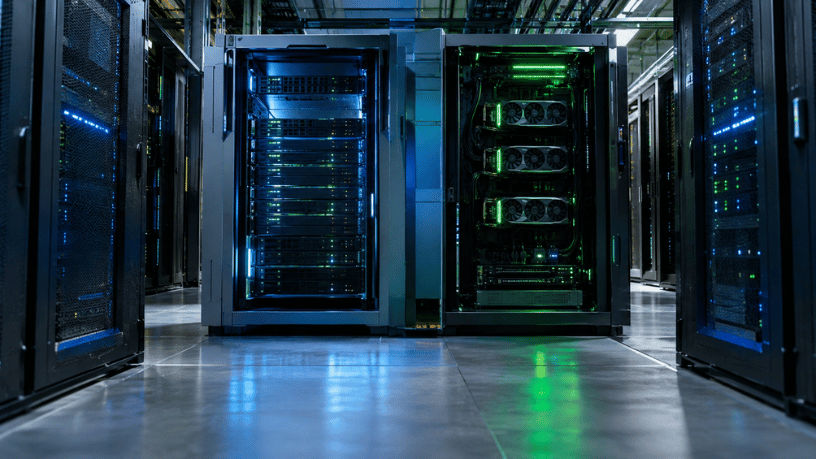
A traditional system, such as an online store or a management system, handles many small, independent requests, and general-purpose processors are well suited to that task. AI workloads do something else: they multiply enormous tables of numbers over and over, and that is where accelerators come in, such as graphics cards (GPUs) and chips built specifically for this kind of calculation. An accelerator is a processor that performs thousands of simple operations at the same time, instead of a few complex operations in sequence.

The difference can be compared to a restaurant kitchen. A skilled cook can prepare any dish, but to peel a thousand potatoes, an entire crew working in parallel finishes much sooner. Parallelism explains why training models on regular processors tends to be slow and expensive, while routine tasks continue to be well served by them.

Training and Using a Model: Two Distinct Demands

Within AI itself, there are two phases with different requirements. Training is the period in which the model learns from large volumes of data, and it usually requires many accelerators working together for long periods, with intense spikes in consumption. Inference is the phase in which the finished model answers questions or makes predictions, and what matters most there is response time, the number of simultaneous requests, and the cost of each response.

As Jean Pierre Lessa e Santos Ferreira explains, treating the two phases as one leads to mistakes in sizing: those who plan infrastructure thinking only about training may end up with idle capacity later, and those who think only about inference may find they cannot train anything new. In companies that use AI continuously, both needs tend to coexist and compete for budget.

Data, Network, and Storage: The Less Visible Bottlenecks

There is a tendency to look only at the accelerator, as if it solved everything. In practice, a powerful chip sits idle if data arrives slowly. AI workloads move large volumes of information between storage, memory, and processors, and a slow internal network or poorly chosen storage turns expensive equipment into an underused resource. For that reason, the conversation about AI infrastructure involves both the speed of the connection between machines and the format and organization of the data.

Power and cooling also come into play. Equipment that runs close to its limit gets very hot and consumes a lot of electricity, and this weighs as much on the choice of location as on the monthly bill. In data centers that house AI workloads, the electrical and cooling designs stop being behind-the-scenes details and begin to limit how many machines can operate in the same space.

Choosing Between the Cloud and In-House Infrastructure

The decision about where to run these workloads is usually treated as a technical one, but it is also financial. The cloud makes it possible to rent accelerators by the hour, without buying equipment, which favors experiments and demands that vary widely. In-house infrastructure, on the other hand, requires a high upfront investment, a specialized team, and a renewal plan, because this type of equipment ages quickly.

According to Jean Pierre Lessa e Santos Ferreira, the starting point is the predictability of the workload: when usage is constant and high, the math tends to flip, and when it is irregular, the flexibility of the cloud usually weighs more. In many organizations, the middle path, with part of the work in one environment and part in the other, ends up being the most balanced, as long as there is clear control over costs and over who accesses what.

When Growth Starts to Cost More Than Expected

The last point of comparison is how cost behaves over time. In a regular system, doubling the number of users usually increases spending in a relatively predictable way. In AI, consumption per response can vary considerably depending on the size of the model and the complexity of the request, and the bill grows in a less linear way. Those who do not track this indicator from the start tend to be surprised when usage becomes widespread.

As Jean Pierre Lessa e Santos Ferreira observes, measuring cost per use and response time early on keeps a promising solution from becoming unviable when it scales. Besides, the reasoning applies to any organization: before buying capacity, it is worth understanding the workload, separating training from inference, looking at data and network with the same attention given to chips, and defining how much each response can cost without compromising the business.


TAGGED:americanascaso americanasCTO Jean Pierre Lessa e Santos FerreiraDiretor de tecnologia Jean Pierre Lessa e Santos Ferreiraex executivosJean Pierre Lessa e Santos FerreiraO que aconteceu com Jean Pierre Lessa e Santos FerreiraQuem é Jean Pierre Lessa e Santos FerreiraTudo sobre Jean Pierre Lessa e Santos Ferreira
Share This Article
Facebook Email Print
Previous Article Criança recebe uma vacina aplicada por um profissional de saúde em ambiente interno. U.S. Measles Transmission Returns After Surge in 2026 Cases
Next Article Fachada frontal da Suprema Corte dos Estados Unidos, em Washington, sob céu azul e com nuvens. Supreme Court to Examine Trump Order Restricting Asylum at Southern Border
Fachada frontal da Suprema Corte dos Estados Unidos, em Washington, sob céu azul e com nuvens.
Supreme Court to Examine Trump Order Restricting Asylum at Southern Border
News
Criança recebe uma vacina aplicada por um profissional de saúde em ambiente interno.
U.S. Measles Transmission Returns After Surge in 2026 Cases
News
Fachada da Suprema Corte dos Estados Unidos em Washington, D.C., com colunas neoclássicas.
Supreme Court Takes Up Trump Order Restricting Asylum at Southern Border
News
Navio porta-contêineres da Evergreen sendo carregado no Porto de Baltimore, nos Estados Unidos.
A Democratic Congress could challenge Trump’s Brazil tariffs, but reversal may take time
News

Euapress: Your daily dose of global news, delivered straight to your inbox. Stay informed on the latest events shaping our world.

Tiago Oliva Schietti
Funeral Franchises in Brazil: Tiago Schietti Explains How to Grow Without Losing the Essence of Humanized Care
News
Analysis of the Brazilian Market Performance
Business
EUApress - [email protected]
Welcome Back!

Sign in to your account

Username or Email Address
Password

Lost your password?