

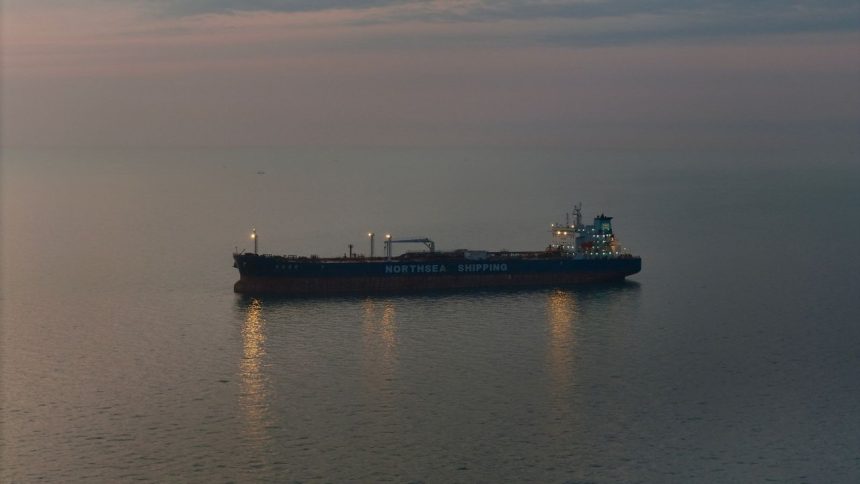
A tanker initially associated with a plan to bring Russian diesel into the United States has changed course toward Brazil, adding uncertainty to an effort by the Donald Trump administration to ease the entry of Russian fuel into the American market. A second tanker linked to the plan is heading toward the Mediterranean, according to the Associated Press.
The route changes came after federal and state authorities raised concerns about possible legal consequences connected to receiving and moving the fuel inside the United States. The development highlights the challenges facing Washington as it seeks greater flexibility in energy trade while restrictions on Russian commodities remain tied to the war in Ukraine.
For Brazil, the episode places the country in the middle of a dispute involving sanctions, maritime logistics and U.S. energy policy. The available information indicates that one tanker is moving toward Brazil, but does not establish that the diesel has been unloaded in the country.
Why the tankers changed course
The vessels were connected to a plan that could have allowed Russian diesel to enter the United States. Their movement changed after government officials warned that the transactions could create legal exposure for companies involved in receiving or handling the cargo on American territory.
The warnings illustrate how the practical operation of an energy shipment can be affected by more than the availability of a buyer or a port. Even when the White House supports a policy shift, companies, state authorities and federal agencies may still face questions involving sanctions, transportation and compliance with U.S. law.
According to the Associated Press report, one tanker turned toward Brazil while the other headed for the Mediterranean. The change does not by itself confirm a completed sale or delivery, but it suggests that the original route to the United States encountered significant obstacles.
Brazil emerges as an alternative destination
Brazil’s appearance as a possible destination reflects its role in the international fuel market and its access to maritime trade routes. A cargo that was initially connected to the U.S. market may be redirected when legal or commercial conditions make the original destination more difficult.
For Brazilian consumers and businesses, the main relevance is the potential effect of international diesel flows on fuel availability, freight costs and transportation expenses. Diesel is central to road freight and other commercial activity, so changes in global supply routes can influence costs even when a specific shipment is not confirmed as delivered.
The case also places attention on the diplomatic dimension of energy trade. A shipment involving Russian fuel can affect relations among the United States, Brazil and other countries that participate in the purchase, transportation or regulation of petroleum products.
Sanctions and the broader U.S. policy context
The route dispute is unfolding against a broader effort by Washington to pressure countries that continue buying Russian energy. The White House Executive Order 14436 establishes tariff-related measures involving countries that make new purchases of Russian-origin crude oil or natural gas.
The executive order provides regulatory context for the uncertainty surrounding Russian energy shipments, although it does not specifically identify the tanker cargo described by the Associated Press. Its existence shows how energy purchases can carry consequences beyond the price of the fuel, including trade measures and increased scrutiny of companies and governments involved in the transactions.
That environment makes the movement of Russian diesel more complicated for importers. A shipment may require coordination among vessel operators, traders, port authorities, financial institutions and governments. Any change in the interpretation or enforcement of restrictions can alter the commercial route of a cargo already at sea.
Implications for U.S. energy policy and Brazil
The episode raises questions about the limits of a policy designed to expand access to fuel while maintaining pressure on Russia. Allowing Russian diesel into the United States could increase supply options for American buyers, but the plan also faces legal and diplomatic constraints that may deter companies from participating.
For Brazil, the immediate issue is not a confirmed new supply arrangement but the possibility that the country could receive cargoes redirected from the U.S. market. If similar diversions occur, they could add another variable to regional fuel trade and to the decisions of companies that manage imports, storage and distribution.
The tanker movements therefore connect Washington’s sanctions policy with Brazil’s position in global energy commerce. They also show how decisions made in the United States can affect shipping routes and commercial expectations far beyond American ports, particularly when Russian commodities remain subject to restrictions and political pressure.