

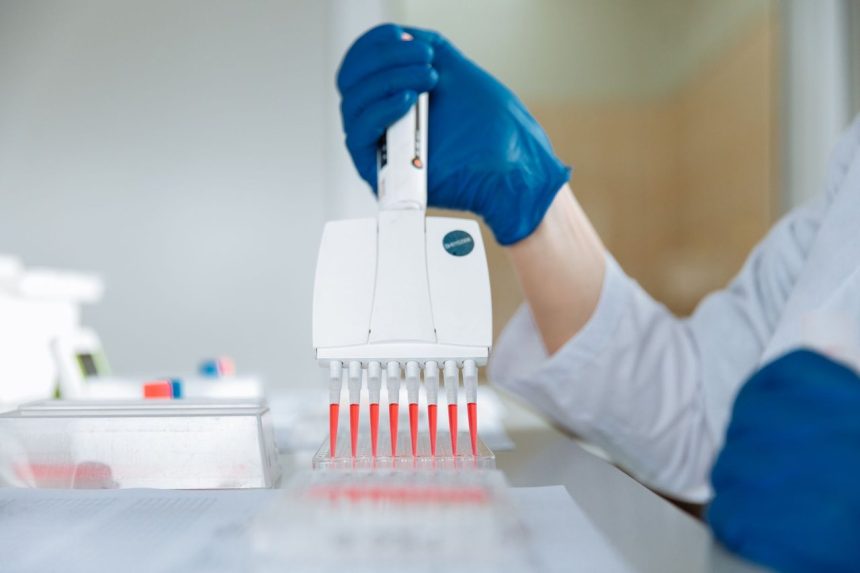
The White House unveiled a national policy for screening nucleic acid synthesis on November 5, 2026, placing the production of synthetic DNA and RNA sequences within a broader U.S. strategy for managing the risks created by advances in artificial intelligence and biotechnology.
The document, identified as NSTM-6, addresses a process used by laboratories and biotechnology companies to produce genetic sequences for research and other applications. Its central concern is ensuring that these tools remain available for legitimate scientific work while reducing the risk that synthetic genetic material could be misused to develop dangerous biological agents.
The policy was sent to a broad group of U.S. government bodies, including the Departments of State, Defense, Agriculture, Commerce, Energy, Health and Human Services, and Homeland Security. It also involves the National Science Foundation and the intelligence community, signaling that Washington views genetic-sequence screening as more than a laboratory or public-health issue.
Why synthetic DNA screening matters to the United States
Nucleic acid synthesis allows researchers to request and produce sequences of DNA or RNA for laboratory use. These tools support biotechnology and scientific research, but the same ability to design or modify genetic material creates security concerns when access is not properly assessed or monitored.
The White House policy connects those concerns to the rapid development of artificial intelligence. AI systems can accelerate the creation, analysis and modification of genetic sequences, potentially making sophisticated biological experimentation more accessible to smaller research teams. That combination increases the importance of screening systems that can assess orders for synthetic DNA and RNA before they are produced.
The policy therefore places oversight at the intersection of national security, public health, scientific innovation and economic competitiveness. Its approach reflects the administration’s effort to establish a common U.S. framework for organizations that manufacture, sell or use synthetic genetic material.
Government-wide coordination and biotechnology oversight
The agencies named in the document cover the main areas affected by the technology. The Department of Health and Human Services is connected to public health and biomedical research, while the Departments of Defense and Homeland Security address security risks. Agriculture and Energy have important roles in sectors that use biotechnology, and Commerce is linked to industry and technological competitiveness.
The inclusion of the State Department and the intelligence community gives the policy an international and strategic dimension. Genetic technologies move through research partnerships, supply chains and commercial relationships that cross national borders. A coordinated U.S. approach could therefore influence how American institutions work with foreign universities, laboratories and biotechnology companies.
The National Science Foundation’s inclusion also underscores the need to balance safeguards with access to research tools. Universities and scientists depend on the ability to obtain genetic sequences for legitimate experiments. Screening requirements are intended to address security risks without eliminating the research infrastructure that supports advances in medicine, agriculture and biotechnology.
Potential effects on research and international cooperation
The policy is relevant beyond federal agencies. Private companies that synthesize genetic material, research institutions that order sequences and laboratories that collaborate with U.S. organizations may need to consider the standards adopted by Washington. The document’s broad scope suggests that screening could become an important part of how institutions evaluate orders and manage relationships with suppliers.
That development may also matter to Brazilian universities, laboratories and biotechnology companies involved in cooperation with U.S. institutions. Research partnerships that rely on American suppliers or shared laboratory projects could encounter additional verification procedures shaped by U.S. policy. The measure may also contribute to international discussions about common practices for biosafety and responsible access to genetic technologies.
For the United States, the challenge is to protect against misuse while preserving the country’s position in scientific research and biotechnology. Excessively restrictive rules could affect legitimate research access, while insufficient screening could leave gaps in the protection of public health and national security. The White House document frames the issue as a matter of governance at a time when AI is expanding the capabilities of biological research.
Policy context in Washington
The screening policy is part of a wider federal discussion about how the U.S. government responds to emerging technologies. The White House Statements of Administration Policy page provides a separate official channel for the administration’s legislative-policy positions, while the National Policy for Nucleic Acid Synthesis Screening contains the specific framework for synthetic genetic material.
By bringing national security, health, science and commerce agencies into the same policy, the White House presents synthetic DNA screening as a strategic issue for the United States. The approach also establishes a direct link between the country’s AI agenda and its efforts to govern biotechnology, two fields that are increasingly developing together.