

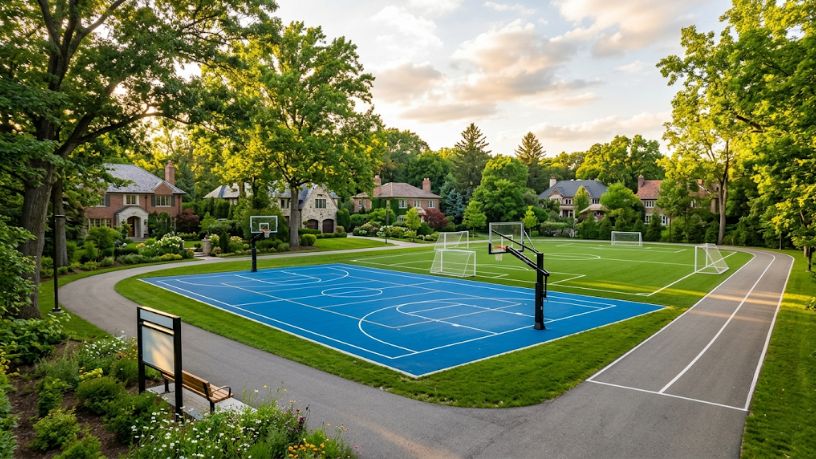
Guilherme Campos, an entrepreneur with extensive experience in the state of Roraima, believes that the presence of public sports facilities in a neighborhood is one of the most accurate indicators of urban quality of life—and one of the most overlooked factors in conventional real estate analysis. Multi-purpose courts, walking trails, outdoor fitness stations, and well-maintained soccer fields are much more than recreational amenities; they are clear signs of the attention that public authorities and developers have given to the everyday experience of the people who will live there.
Learn why high-quality public sports facilities are just as important as transportation infrastructure when evaluating a neighborhood.
What Do Public Sports Facilities Reveal About a Neighborhood?
The availability and condition of public sports facilities reflect planning decisions made long before residents move in—or the lack of such planning. When a residential development is designed with appropriately sized spaces dedicated to sports and recreation, it creates something that no home renovation can provide: high-quality shared spaces for social interaction, physical activity, and relaxation.
According to Guilherme Campos, neighborhoods with well-distributed and properly maintained sports facilities consistently demonstrate higher resident satisfaction, lower turnover rates, and more stable property appreciation over time.
The condition of these facilities is equally revealing. A well-maintained sports court indicates active management of public spaces, whether by local government or by the community itself. In turn, this reflects a higher level of civic engagement, which positively influences safety, cleanliness, and the overall perception of neighborhood quality.
The Impact on Different Resident Profiles
The demand for quality public sports facilities extends far beyond a single demographic. Children need safe places to play, teenagers seek affordable recreational options, adults increasingly incorporate exercise into their daily routines, and older adults rely on outdoor fitness equipment to maintain their health. Each group benefits from these spaces in different yet equally meaningful ways.
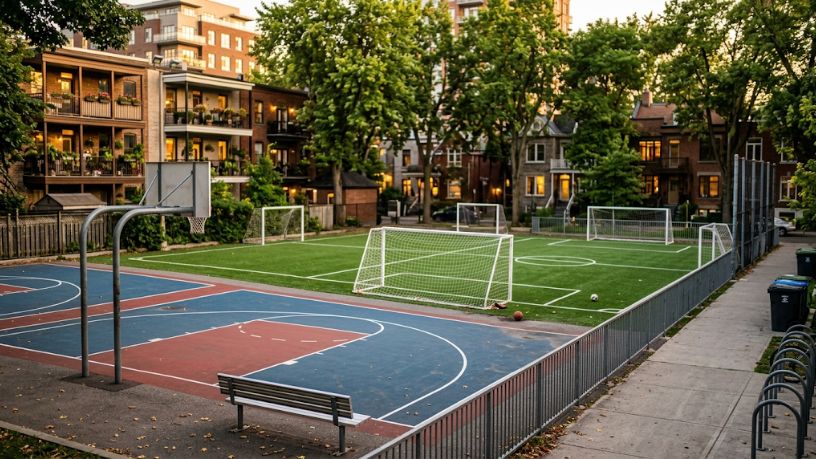
Developments that account for this diversity when planning recreational areas create communities with much broader market appeal than those that focus on only one type of amenity. This broader appeal expands the pool of potential buyers while reducing the risk of slower market absorption.
In cities such as Boa Vista, where high temperatures persist throughout most of the year, shaded and well-equipped public spaces become even more valuable. As Guilherme Campos explains, this thoughtful approach to recreational planning has a direct impact on the attractiveness of residential developments.
Public Sports Facilities and Urban Safety
The connection between quality public sports facilities and urban safety has been documented in numerous settings and is especially evident in residential neighborhoods. Well-lit recreational areas that are regularly used by residents of all ages and kept in good condition naturally encourage continuous public presence and informal surveillance. This dynamic reduces the perception of insecurity and, in many cases, contributes to lower crime rates.
As Guilherme Campos points out, this relationship reinforces the importance of evaluating the quality of nearby public sports facilities when selecting locations for new developments. Neighborhoods with active, well-maintained public spaces offer residents an additional layer of quality of life that no private development can provide on its own.
Historically, neighborhoods with active and frequently used public spaces have consistently performed better on public safety indicators than those where public areas are neglected or underutilized, regardless of the construction standards of the surrounding properties.
How to Evaluate Public Sports Facilities Before Buying a Property
For homebuyers and investors considering properties in either new or established neighborhoods, visiting nearby public sports facilities can provide valuable insights that rarely appear in marketing materials. The condition of sports courts, the availability of adequate nighttime lighting, the presence of functional restrooms and changing facilities, and the level of daily usage at different times all offer direct evidence of a neighborhood’s commitment to residents’ quality of life.
As Guilherme Campos concludes, incorporating this assessment into the purchasing process is a simple and practical way to look beyond traditional criteria such as location and price. It helps identify neighborhoods that deliver genuine quality of life rather than merely promising it on paper.
Follow @guicamposvlg on Instagram for more insights on urban quality, community development, and the real estate market.