
Pilot training is clearly undergoing a methodological shift, and Wander Aguilera Almeida, an entrepreneur and aircraft pilot, notes that simulators have expanded the ability to practice situations that would be difficult to safely replicate in actual flight. Operational procedures involving system failures, adverse weather conditions, and emergencies can now be practiced in a controlled environment.
Simulators have always been an integral part of commercial aviation training. However, advances in technology have made them increasingly accessible. More compact training devices, high-fidelity software, and virtual reality headsets have begun to be introduced in flight schools and flying clubs, giving general aviation access to resources that were once largely restricted to major airlines.
This transformation comes at a time when the aviation industry is expanding and demand for qualified pilots is growing. Throughout this article, learn how simulators have evolved, how they are changing pilot training, and which aspects still require real-world flight experience.
From Full-Scale Simulators to More Accessible Training Tools
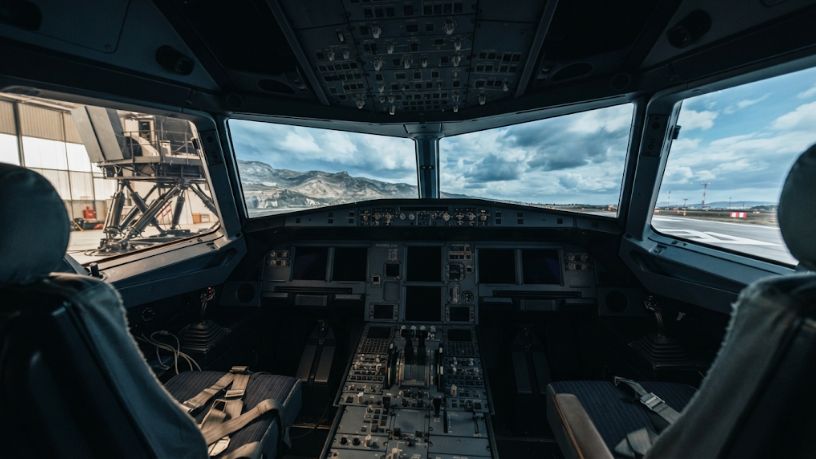
Full-flight simulators, equipped with a cockpit identical to that of the actual aircraft and a motion platform, remain the highest standard in aviation training. These simulators are used primarily for initial and recurrent airline crew training. However, their high cost has traditionally limited access for smaller flight schools, which have relied heavily on training in actual aircraft, resulting in higher expenses related to fuel, maintenance, and flight hours.
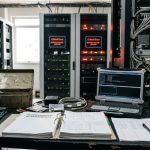
Advances in computers and software have changed this landscape. Procedure training devices equipped with panels that replicate the instruments found in light aircraft have become increasingly common. In addition, virtual reality has made it possible to experience immersive three-dimensional cockpits at a more affordable cost. In accordance with guidelines established by civil aviation authorities, some of the hours completed using approved training devices may count toward training requirements.
According to Wander Aguilera Almeida, this democratization of training technology helps strengthen a culture of preparedness, as pilots have the opportunity to repeat procedures as many times as necessary until they become second nature, without the costs and risks associated with each actual flight hour.
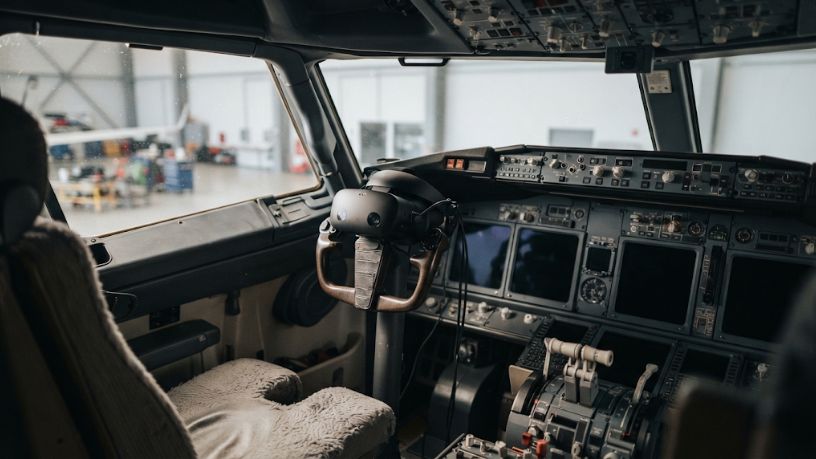
What Is Changing in Training, and What Remains Irreplaceable?
The main change lies in the learning methodology. Instead of becoming familiar with everything only once inside the aircraft, students can begin actual flight training already acquainted with the cockpit, checklists, and procedural sequences, allowing them to make better use of every hour in the air. Instructors, meanwhile, can pause simulations, repeat specific segments, and analyze decisions in detail.
Simulators also make it possible to practice procedures that would be unsafe or impractical to reproduce in an actual flight, such as engine failures during critical phases of flight, instrument failures, or inadvertent entry into adverse weather conditions. In his analysis, Wander Aguilera Almeida emphasizes that this type of training reinforces respect for safety procedures by demonstrating, in practice, the consequences of decisions made under pressure.
One of the latest trends is competency-based training, which evaluates not only the execution of maneuvers but also skills such as workload management, communication, situational awareness, and decision-making. Data analysis systems can record student performance and help identify areas that require additional training.
However, there are clear limitations that must be recognized. No simulator can fully reproduce the physical sensations of flight, the variability of real-world weather, or the psychological pressure of actually being in command of an aircraft. According to Wander Aguilera Almeida, simulators prepare pilots for flight, but experience accumulated in the air remains an indispensable part of their training.
How Is Technology Creating Better-Prepared Pilots?
The use of simulators and virtual reality in pilot training provides greater efficiency, accessibility, and safety, making it possible to practice complex scenarios without unnecessarily exposing students and instructors to risk. The current trend is toward greater integration between virtual training, data analysis, and in-flight instruction.
According to Wander Aguilera Almeida, an entrepreneur and aircraft pilot, this evolution reinforces the idea that aviation requires continuous learning, from the very first instructional flight to periodic license and rating renewals.
The balance between simulator hours and real-world flight experience should guide pilot training in the years ahead. As the number of available training tools increases, so does the responsibility of flight schools and pilots to use them effectively to develop professionals who are more safety-conscious, disciplined, and prepared to make sound decisions.