

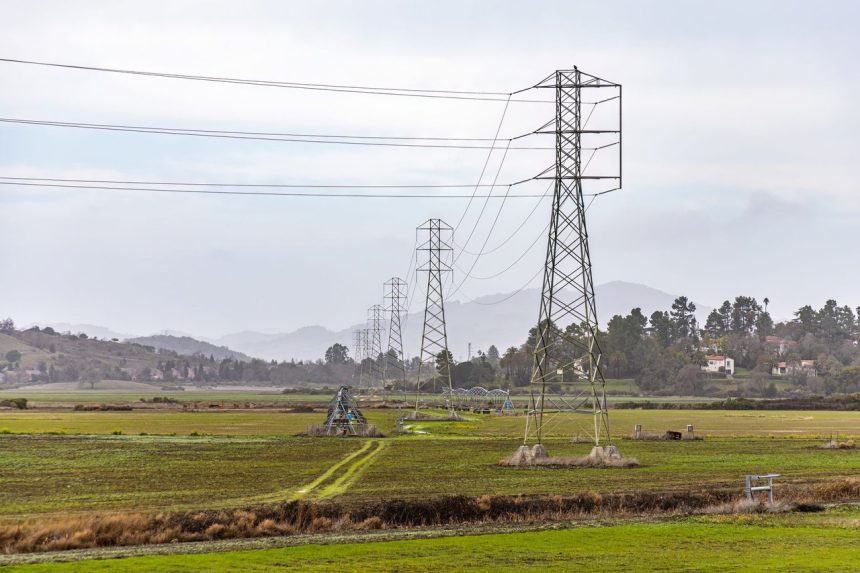
Democrats preparing to take control of both chambers of the U.S. Congress plan to make lower electricity bills a central argument for their energy agenda. The strategy is expected to combine support for renewable generation with investment in the power grid, presenting clean energy as a response to inflation and pressure on household budgets.
The approach follows the legislative elections held in November, when the cost of living remained a major concern for American voters. According to the Associated Press, Democrats are preparing to use energy costs to defend measures that expand clean power and modernize electricity infrastructure while confronting President Donald Trump’s emphasis on fossil fuels.
The new congressional majority will formally begin its work in January 2027. Its ability to turn the entire program into law will remain limited, particularly because Trump could veto legislation approved by lawmakers. Even so, Democrats will have greater influence over the subjects debated in Washington, including the federal budget, energy regulation, infrastructure investment and rules affecting major electricity consumers.
Energy costs become a political message
The Democratic strategy seeks to connect the energy transition to an issue that reaches beyond the traditional environmental debate: the monthly cost of keeping a home and operating a business. By presenting renewable energy and grid upgrades as tools to reduce expenses, lawmakers can place inflation, household finances and industrial competitiveness at the center of the discussion.
That framing also creates a direct contrast with the White House. Trump has promoted a policy centered on fossil-fuel production, while Democrats intend to argue that a broader clean-energy buildout can strengthen the economy and address pressure on consumers. The disagreement is likely to shape discussions over project approvals, transmission networks and the public resources directed toward energy development.
The White House presidential actions archive provides the administration’s official record of presidential proclamations and helps place the congressional dispute within the broader policy environment established by Trump. The emerging debate is therefore not only about energy sources, but also about which federal priorities should guide investment and regulation.
Why the power grid matters
Electricity infrastructure has become increasingly important to the American economy. The expansion of data centers, transportation electrification, manufacturing and technology is increasing attention on the reliability, capacity and cost of the power system. In that context, Democrats are expected to portray grid modernization as an economic policy as well as an environmental measure.
The issue may also influence the relationship between energy policy and inflation. Electricity prices affect households directly, while energy costs are incorporated into the expenses of companies that produce goods, provide services and operate large facilities. A political program focused on lowering those costs allows Democrats to challenge the idea that climate policy necessarily increases the financial burden on consumers.
Still, the congressional balance will not remove the institutional obstacles to major legislation. The president’s veto authority is one limitation, while the practical challenge of financing and approving infrastructure projects is another. As a result, the next phase of the debate may focus as much on budgets, regulatory decisions and oversight as on bills capable of becoming law.
Potential effects for Brazil
The dispute in Washington is relevant to Brazilian readers because U.S. energy decisions can influence international markets and investment flows. Changes in American demand for oil, natural gas, renewable-energy equipment and related technologies may affect companies and suppliers beyond the United States.
Energy policy can also have consequences for the dollar and for the costs faced by countries that trade with the American economy. For Brazil, shifts in U.S. investment priorities may create opportunities or challenges for products and technologies connected to the energy transition, while changes in commodity markets can affect the broader environment for bilateral commerce.
The Democratic proposal is therefore likely to be judged on two levels. Domestically, it will be measured against the promise of more affordable power and relief from cost-of-living pressures. Internationally, it may contribute to changes in energy demand, industrial investment and market expectations that reach consumers, companies and investors in Brazil.
Associated Press reported on November 8, 2026, that Democrats were preparing this clean-energy push after the elections. With the new majority scheduled to take office in January 2027, energy costs are set to become a central point of conflict between Congress and a White House committed to a fossil-fuel-oriented agenda.