
The most immediate issue raised by Brazil’s position in an international pesticide ranking is not only the country’s place on the list, but what that position actually measures. A survey attributed to Oxfam and reported by Agencia Brasil on October 16, 2026, identifies Brazil as the second-largest importer of pesticides that are not authorized for use in the European Union.
The finding places Brazil at the center of a broader debate about unequal regulatory standards in global agricultural trade. Products or substances that cannot be used within the European bloc may nevertheless be shipped to countries outside it, where national authorities apply their own rules. The report, as described in the available coverage, does not by itself establish that every product involved is illegal in Brazil or that imports violated Brazilian law.
What the ranking shows — and what it does not
The available information does not clarify whether the ranking is based on the total volume of imported products, the quantity of active ingredients, the financial value of transactions or another measurement. It also remains necessary to establish whether the study examines direct imports, formulated products, active ingredients or a combination of categories.
That distinction is important because different ways of counting can produce very different interpretations. A ranking based on weight would not necessarily reflect the number of products entering the country, while a ranking based on monetary value would describe a different aspect of the trade. Without the methodology, the period covered and the definitions used by the study, the position attributed to Brazil should be treated as an indicator for further investigation rather than a complete picture of the market.
The same caution applies to the expression “pesticides prohibited in the European Union.” The phrase may refer to substances that are not authorized for use inside the bloc, but the available account does not provide the names of the products, the reasons for restrictions or the legal status of each substance in Brazil. Those details are essential for assessing potential consequences and comparing regulatory systems accurately.
Why Brazil is part of the international debate
Brazil is one of the countries whose agricultural production is closely connected to international commodity markets. That makes the regulation of crop-protection products relevant not only to farmers, but also to workers, consumers, exporters and trading partners. When the same chemical is subject to different rules in different jurisdictions, questions arise about who bears the risks and how safety decisions are distributed across borders.
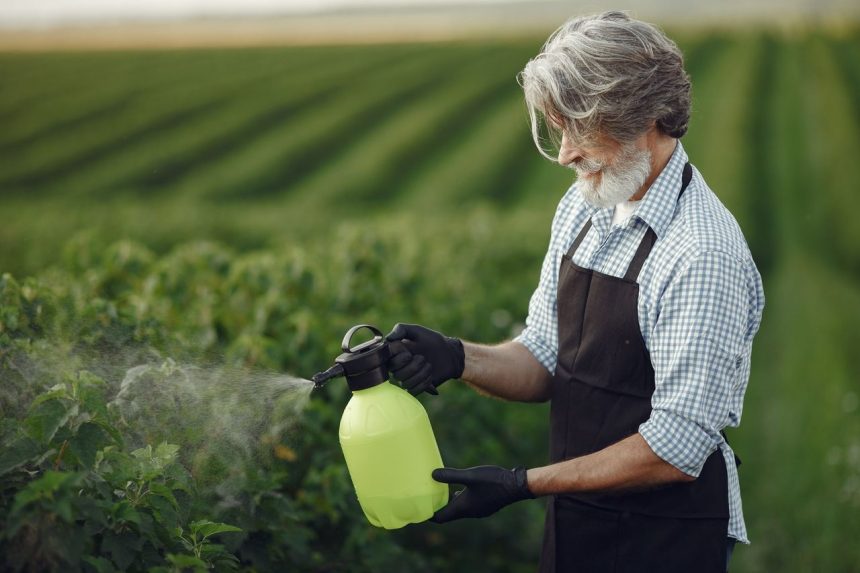
For rural workers, the central concern is exposure during the handling and application of agricultural chemicals. For consumers, the debate involves the standards used to authorize products and monitor possible residues. Environmental questions may include the effects of chemical use on soil, water and surrounding ecosystems. However, the information available in the cited report is not sufficient to quantify any of these impacts or to link specific health or environmental outcomes to the ranking.
The issue also has a commercial dimension. Exporting products that are not authorized for domestic use in the exporting market can create an asymmetry in which one set of safety standards applies to residents of the country of origin and another applies to overseas buyers. The existence and scale of that practice, as well as the companies and countries involved, would need to be confirmed through the original Oxfam material and official trade records.
What Brazilian authorities would need to clarify
In Brazil, the discussion involves the country’s system for registering, importing, selling and applying pesticides. The National Health Surveillance Agency, known as Anvisa, and the Brazilian Institute of Environment and Renewable Natural Resources, or Ibama, are among the public institutions relevant to the regulatory framework mentioned in the reporting brief.
Still, no position from Anvisa, Ibama or another Brazilian authority is included in the available source material. It is therefore not possible to state how the agencies assess the Oxfam-attributed ranking, whether they have challenged its methodology or whether they have opened a review of the products and transactions referenced by the study.
The next step for a complete assessment would be to locate the original Oxfam report or technical note. That document should indicate the period analyzed, the countries compared, the customs or commercial databases used and the criteria for classifying a pesticide as prohibited in the European Union. It should also show whether Brazil’s second-place position reflects volume, value, active ingredients or formulated products.
A finding that requires verification, not speculation
The information reported on October 16 brings an important regulatory question to an international audience, but it does not answer all of the questions raised by the ranking. Brazil’s position deserves scrutiny because it connects agricultural trade with public health, environmental oversight and differences between national rules.
Until the underlying methodology and the official responses are available, the most accurate conclusion is limited: an Oxfam-attributed study, as reported by Agencia Brasil, places Brazil second among the countries importing pesticides not authorized for use in the European Union. Determining what that means in practice will require identifying the substances involved, verifying their status under Brazilian law and examining the data behind the ranking.