

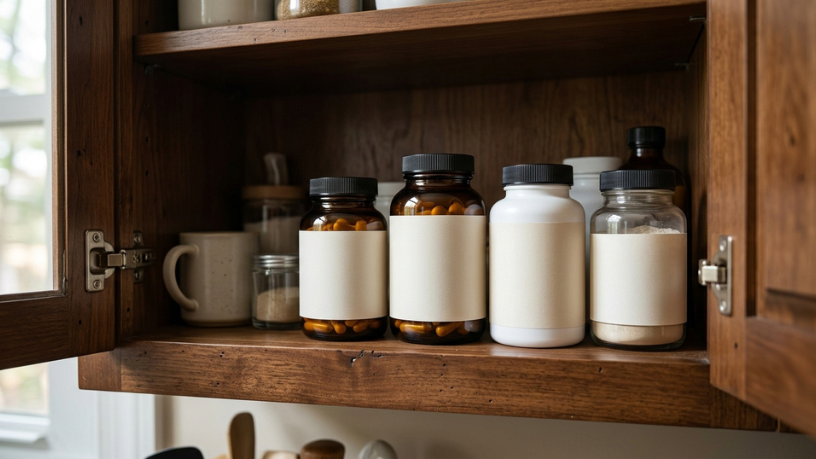
The container was chosen carefully, the label was read, and the usage instructions are clear, but one detail often goes unnoticed: where the supplement is stored. Lirius Suplementos considers proper storage an essential part of the information provided on the label, and there is a reason for that. Heat, light, and moisture can alter a product even before its expiration date.
The problem is that the most convenient places in the house are often the worst. The following habits may seem harmless and are common in many daily routines, usually without anyone noticing their effects.
The Bathroom Cabinet, Where Moisture Builds Up
This is one of the first places people think of because it is near the toothbrush and naturally fits into the morning routine. However, every hot shower turns the room into a small sauna, and steam can find its way inside even tightly closed containers.
Capsules and tablets exposed to moisture may soften, stick together, or lose their shape. Some ingredients, such as probiotics and certain vitamins, are particularly sensitive to these conditions. The common instructions found on labels, to store products in a dry place protected from light and heat, describe exactly the opposite of a bathroom environment.
The Glove Compartment and the Bag Left in the Sun
People who take supplements to work or to the gym often leave them in the car or in a backpack. Inside a vehicle parked in direct sunlight, temperatures can rise well above those of the surrounding environment in a short time.
Repeated heat exposure, day after day, accelerates the degradation of sensitive components and can change the texture and flavor of powders and gummies. Lirius Suplementos points out that those who need to transport their supplements should carry only the amount needed for the day in a sealed container and keep the rest at home.
The Pill Organizer That Replaces the Original Packaging
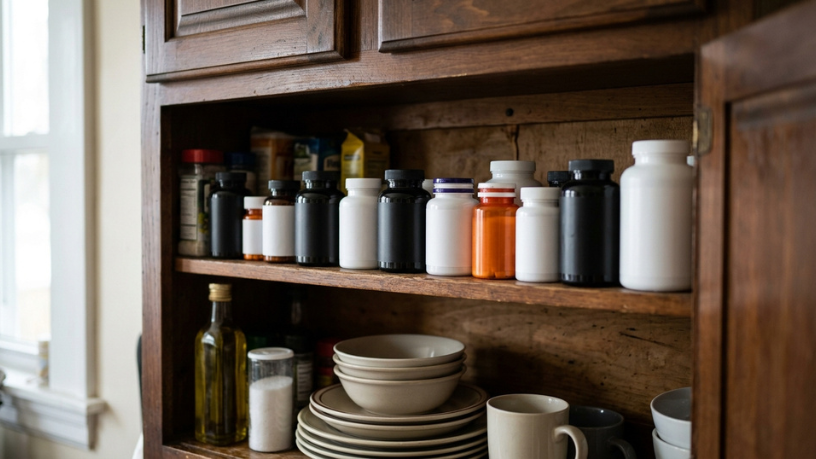
Transferring everything into a weekly pill organizer may seem like a good way to avoid missing a dose. The downside is that this immediately removes the protection provided by the original packaging, along with all the information that came with it.
The container was selected for that specific product: its material, color, and seal all contribute to proper storage. Moving the supplement also means losing access to the batch number, expiration date, usage instructions, and warnings. If a question arises or customer service needs to be contacted, it may be impossible to identify exactly what was taken. For this reason, Lirius recommends keeping the original packaging properly closed after use. An organizer can be useful for a few days, provided the original container is kept for reference.
The Loosely Closed Lid and the Discarded Sachet
Many supplement containers include a small desiccant sachet that absorbs moisture from the inside. It often ends up in the trash as soon as the container is opened for the first time, as though it were merely part of the shipping packaging.
Another common mistake is leaving the lid resting loosely on the container to make daily use quicker. Every opening allows air and moisture to enter, and the seal is designed precisely to limit this exposure. These are small actions, but their effects can add up over the weeks that the same container remains in use.
Proper Storage Is Also Part of Responsible Use
Few people associate storage with responsible supplement use, but the connection is direct. Everything the label states about composition and quantity assumes that the product has been kept under the recommended conditions. When it is not, the printed information and the contents of the container may no longer match.
Proper storage is therefore the final step in reading the label. In practice, all it takes is a dry, cool place away from direct light, such as a bedroom or living room cabinet, with the original container tightly closed. It is a simple precaution, and Lirius considers it just as important as the product’s composition: the contents of the container correspond to what the label declares only when the supplement is consumed in the same condition in which it left the factory.