
The diplomatic dispute marks a new escalation in tensions between Washington and Brasília, with potential consequences for trade, politics, and bilateral cooperation.
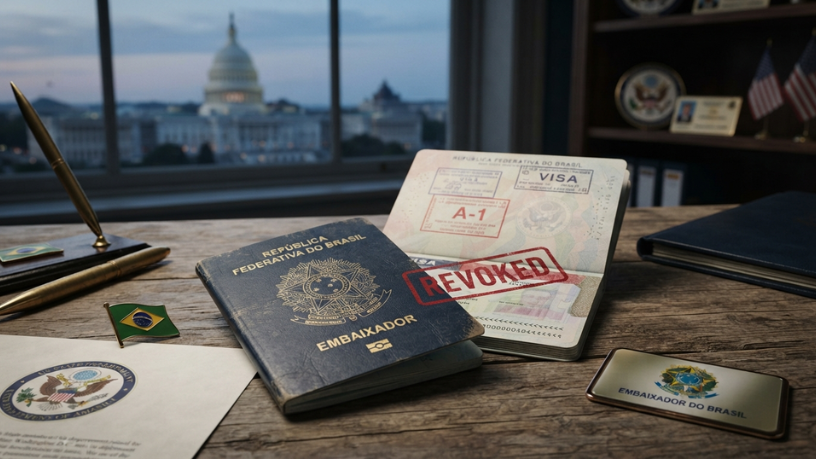
The relationship between the United States and Brazil has entered another period of heightened tension after the Trump administration revoked the visa of Brazil’s ambassador to Washington, Maria Luiza Ribeiro Viotti. The move, announced this week, is one of the most significant diplomatic actions taken by either country in recent years and comes amid an increasingly strained relationship fueled by disagreements over diplomatic appointments, trade policies, and accusations of political interference.
For Brazilian readers, the episode goes far beyond diplomatic protocol. The United States remains Brazil’s second-largest trading partner, a major destination for Brazilian exports, and an important source of investment and technology. As a result, any deterioration in relations between the two countries can influence businesses, investors, exchange rates, and even political discussions inside Brazil. While both governments insist they want to preserve long-term cooperation, recent events suggest the relationship is becoming more unpredictable ahead of Brazil’s presidential election and the U.S. midterm elections.
Why did the United States revoke Brazil’s ambassador’s visa?
According to U.S. officials, the decision was presented as a reciprocal diplomatic measure. Washington argues that Brazil delayed approval of President Donald Trump’s nominee for U.S. ambassador and also denied visas to two American diplomats, prompting the administration to respond by revoking Ambassador Viotti’s visa. Brazilian authorities, however, maintain that they have followed standard diplomatic procedures and reject accusations that the delays were politically motivated.
The disagreement reflects a broader deterioration in bilateral relations that has developed over recent months. President Luiz Inácio Lula da Silva has repeatedly criticized what he describes as American interference in Brazil’s domestic political affairs, while members of the Trump administration have questioned Brazilian decisions related to trade, diplomacy, and electoral oversight. The visa dispute therefore represents more than an isolated diplomatic disagreement—it has become a symbol of growing mistrust between the two governments.
Diplomatic visa revocations involving ambassadors are relatively uncommon between countries with longstanding strategic partnerships. Although ambassadors generally continue performing many of their official duties, such actions send a strong political message and often indicate that negotiations behind the scenes have reached a difficult stage. Even so, neither government has announced a suspension of formal diplomatic relations, and both continue to express interest in maintaining cooperation on issues such as commerce, security, and regional stability.
Could this diplomatic dispute affect Brazil’s economy and businesses?
For many Brazilians, the most important question is whether political tensions could produce economic consequences. While the visa decision itself does not directly change trade rules, it occurs against the backdrop of broader commercial disagreements that have already affected bilateral relations. Earlier this year, the Trump administration imposed new tariffs on certain Brazilian imports after concluding a Section 301 investigation into Brazilian trade practices. The U.S. government argues that the measures are intended to address what it considers unfair policies affecting American companies.
Trade disputes between major economies often create uncertainty for exporters and investors. Brazilian companies that depend on the U.S. market may face additional concerns regarding future negotiations, while American businesses operating in Brazil could also monitor whether political disagreements translate into regulatory or commercial changes. Although existing trade flows continue, diplomatic tensions generally make future agreements more difficult to negotiate and may discourage investment decisions until political conditions become clearer.
Financial markets also pay close attention to developments in U.S.–Brazil relations. Investors typically evaluate diplomatic stability when making long-term decisions involving international trade, infrastructure, and manufacturing. Although exchange-rate movements depend on many factors—including U.S. interest rates, inflation, and global commodity prices—political uncertainty between two major trading partners can contribute to increased market volatility. For Brazilian consumers, that may eventually influence import prices, international travel costs, and business confidence, even if the immediate impact remains limited.
What happens next for US–Brazil relations?
The coming months are likely to determine whether the current dispute remains a temporary diplomatic confrontation or evolves into a broader strategic conflict. Both countries continue to share significant economic interests, making a complete breakdown in relations unlikely. At the same time, domestic political pressures on both sides may complicate efforts to reduce tensions quickly, particularly as election campaigns intensify in Brazil and the United States.
Another factor attracting attention is the legal and political debate surrounding recent U.S. trade actions. Several American states have challenged new tariff measures introduced by the Trump administration, arguing that they exceed presidential authority following previous court rulings. Although those lawsuits concern broader trade policy rather than Brazil specifically, their outcome could influence how future tariff decisions are implemented and whether existing measures remain in force.
For Brazilian readers, the most practical takeaway is that relations between Brasília and Washington remain strategically important despite political disagreements. The United States continues to be a crucial destination for Brazilian exports, an essential technology partner, and a major influence on global financial markets. Whether the current diplomatic tensions lead to deeper economic consequences will depend on future negotiations, political developments in both countries, and the willingness of each government to restore a more stable diplomatic dialogue. For now, businesses, investors, and policymakers on both sides of the hemisphere will be watching closely as one of the Americas’ most important bilateral relationships enters another uncertain chapter.
Sources:
- Reuters – US revokes Brazilian ambassador’s visa amid diplomatic dispute (04/08/2026)
https://www.reuters.com/world/americas/ - Reuters – Cobertura sobre as relações diplomáticas entre Brasil e Estados Unidos
https://www.reuters.com/world/ - U.S. Trade Representative (USTR) – Comunicados oficiais sobre tarifas e medidas comerciais dos EUA
https://ustr.gov/ - U.S. Department of State – Comunicados e política externa dos Estados Unidos
https://www.state.gov/ - The White House – Comunicados oficiais da administração norte-americana
https://www.whitehouse.gov/ - U.S. Embassy & Consulates in Brazil – Informações oficiais sobre relações diplomáticas EUA–Brasil
https://br.usembassy.gov/ - Ministério das Relações Exteriores (Itamaraty) – Notas oficiais sobre política externa brasileira
https://www.gov.br/mre/ - Associated Press (AP News) – Cobertura internacional sobre diplomacia e comércio entre EUA e Brasil
https://apnews.com/ - The Wall Street Journal – Análises sobre política externa e economia dos EUA
https://www.wsj.com/ - Congress.gov – Informações sobre ações e projetos do Congresso dos Estados Unidos
https://www.congress.gov/