

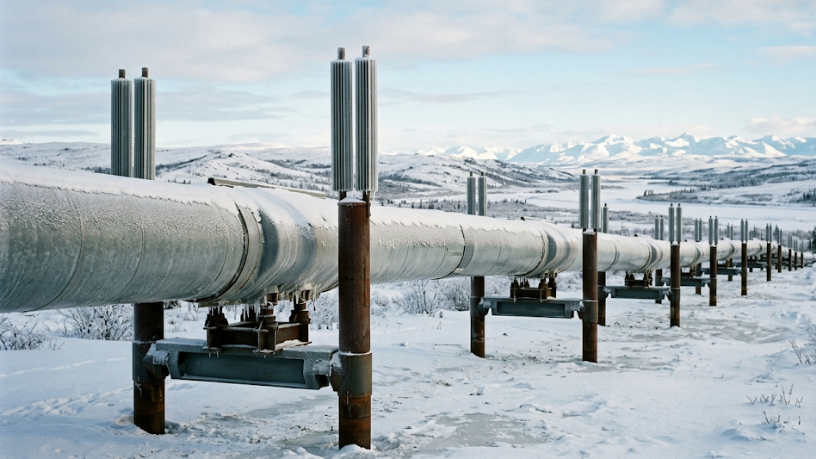
Paulo Roberto Gomes Fernandes, CEO and founder of Liderroll, closely follows pipeline infrastructure projects in extreme climate regions, especially those where the combination of low temperatures, unstable soil, and limited logistical access creates challenges that conventional construction methods are not prepared to solve.
The construction of gas pipelines in the Arctic, permafrost regions, and mountainous areas exposed to severe snowstorms imposes a combination of technical, logistical, and occupational safety requirements on engineering teams, demanding specialized preparation and adapted equipment. The experience accumulated in these environments represents a competitive advantage that only a few players in the global market have been able to develop.
Mechanical behavior of materials under extremely low temperatures
The mechanical behavior of steels used in pipelines changes significantly at very low temperatures. The ductile-to-brittle transition, which occurs at a characteristic temperature for each type of steel, defines the limit below which the material loses its ability to absorb energy before fracturing. However, pipelines designed without considering the minimum service temperature expected for the installation region may suffer brittle failures during extreme cold events that would still fall within the design envelope for other regions.
Paulo Roberto Gomes Fernandes points out that specifying steels with guaranteed impact resistance at low temperatures, verified through Charpy tests performed at the minimum design temperature, is an essential requirement for projects in severe climates. The savings achieved by using lower-cost materials with inferior low-temperature performance tend to be offset by the repair or replacement costs of compromised sections after the first winter of operation.
Permafrost, soil instability, and risks to structural integrity
Permafrost, the permanently frozen soil layer found in Arctic and subarctic regions, creates geotechnical conditions that can severely compromise the integrity of buried pipelines. The warming of the soil surrounding the pipeline, caused by the heat of the transported product, can thaw the permafrost and trigger differential settlement, introducing severe mechanical stress on welded joints. As a result, projects in permafrost regions often choose above-ground pipeline installations, supported by structures that allow air circulation beneath the pipe to prevent heating of the foundation soil.
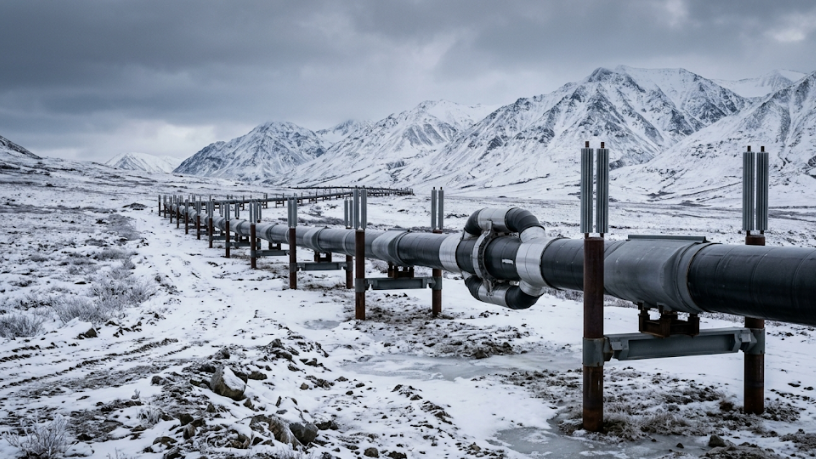
Paulo Roberto Gomes Fernandes emphasizes that ongoing climate change is altering the depth and stability of permafrost in several regions, making projects originally built based on historical data progressively more vulnerable. Continuous monitoring of geotechnical conditions in sections crossing permafrost has become an integrity management requirement that did not exist in the original programs of many operating facilities.
Construction logistics in regions with climate-restricted access
Construction activities in extreme climate regions face logistical restrictions that shape project schedules just as decisively as technical challenges. The available work windows during the Arctic winter are limited by occupational safety concerns, while the transportation of materials and equipment depends on traffic conditions that vary radically with the seasons.
In this regard, Paulo Roberto Gomes Fernandes states that logistical planning for projects in extreme climates must be developed with the same level of detail as technical planning, including contingency margins that reflect the real variability of expected operational conditions.
Construction modularity, which allows components to be manufactured in controlled environments and assembled on-site only during the most favorable periods, is one of the most effective strategies for maximizing productivity in regions where external working conditions are severely restricted. Therefore, Paulo Roberto Gomes Fernandes concludes that companies with true expertise in these approaches occupy a differentiated position in the global market for extreme-climate projects, where the ability to deliver quality work on schedule is even scarcer than under conventional conditions.
Author: Diego Rodríguez Velázquez