
Iran’s Islamic Revolutionary Guard Corps (IRGC) has escalated tensions in the Middle East by targeting 18 major technology companies, including Apple, Google, Microsoft, Tesla, Nvidia, Boeing, and Oracle. This unprecedented move represents a strategic shift from conventional military engagements toward directly threatening commercial technology infrastructure. By designating these companies as “legitimate military objectives,” Tehran signals that modern conflicts are no longer confined to battlefields but extend into the corporate and technological arenas that underpin national security.
The threat follows claims that advanced technology, particularly cloud computing, artificial intelligence, and surveillance systems, has been employed by American and Israeli intelligence agencies to track and eliminate senior Iranian officials. From Tehran’s perspective, corporations providing data analytics, predictive intelligence, biometric tracking, and AI-enabled targeting have become indirect participants in military operations. The IRGC’s public warning not only elevates risk for these companies’ regional operations but also challenges the traditional distinction between civilian and military targets.
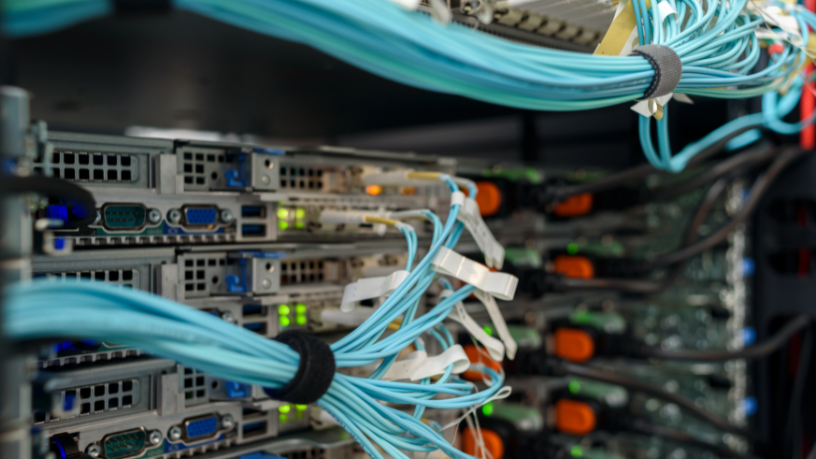
Gulf nations such as the UAE, Qatar, Bahrain, and Israel host critical data centers, AI research hubs, and cloud computing infrastructure operated by these multinational corporations. These facilities are essential for regional economic activity, communications networks, and even military support systems. By threatening them, the IRGC effectively creates a multidimensional risk scenario where cyber operations, physical infrastructure attacks, and financial disruption converge. The potential for collateral damage and disruption to civilian services highlights the stakes of targeting dual-use technologies in contemporary conflict.
Strategically, the IRGC appears to follow an infrastructure warfare doctrine, emphasizing asymmetric retaliation. By targeting corporate assets instead of uniformed forces, Iran seeks to impose disproportionate costs on the U.S. and its allies while minimizing direct confrontation. This approach mirrors previous Iranian strategies against oil terminals, commercial shipping, and telecommunications networks, reinforcing the notion that economic and technological leverage can substitute for conventional military force in deterring adversaries.
The corporations named by Tehran vary in operational exposure. Microsoft, Google, Oracle, and IBM maintain large regional facilities and cloud operations, making them particularly vulnerable. Companies like Apple and Tesla have smaller physical footprints, yet their extensive supply chains and service networks remain potential targets. Boeing and General Electric are exposed through aviation, energy, and defense-industrial projects linked to Gulf governments and U.S. military logistics. Firms like Palantir, Intel, and Nvidia are deeply embedded in AI initiatives, predictive analytics, and semiconductor infrastructure, making them critical nodes in the intelligence and defense ecosystem.
From a regional perspective, the Gulf has become a primary battleground for technological influence. Cities such as Dubai, Abu Dhabi, Doha, and Manama host dense clusters of corporate facilities integrated with military and financial infrastructure. Any disruption to these nodes could trigger cascading effects, impacting cloud services, financial systems, telecommunications, and critical government operations simultaneously. The IRGC’s threat therefore introduces a novel form of escalation where civilian infrastructure becomes a strategic leverage point.
For global corporations, the immediate challenge lies in risk mitigation and operational continuity. Companies may need to evacuate staff, reinforce perimeter security, relocate sensitive data, and accelerate contingency planning. The threat also underlines the necessity of cybersecurity resilience and geopolitical awareness in corporate strategy, as even non-military entities can be drawn into complex international conflicts. The situation emphasizes the growing intersection of corporate responsibility, international security, and technology governance.
The broader implications extend beyond corporate risk. Tehran’s framing of these technology firms as operational extensions of American and Israeli intelligence challenges established norms of international law and cyber conduct. By explicitly linking civilian technological infrastructure to military objectives, Iran is redefining modern warfare paradigms and demonstrating how private sector assets can be perceived as strategic targets. This evolution has profound consequences for multinational operations, insurance, cybersecurity standards, and diplomatic engagement.
The IRGC’s warning also highlights the potential for miscalculation. A strike on any Gulf-based facility could be interpreted as a direct attack by the U.S., potentially triggering military retaliation and expanding the conflict. Civilian populations and governments in the Gulf may face heightened risk, emphasizing the urgency for coordinated defense, intelligence-sharing, and crisis management. The convergence of commercial, technological, and military considerations illustrates the complexity of modern regional conflicts.
In essence, the IRGC’s threats signal a new era where corporate infrastructure and technology hubs are entwined with national security and conflict strategy. The expansion of targeting beyond traditional military installations underscores the importance of resilience, proactive security planning, and geopolitical foresight. As regional tensions persist, the interplay between technology, corporate presence, and asymmetric warfare will continue to shape the strategic landscape of the Gulf, demonstrating that the modern battlefield extends far beyond conventional combat zones.
Autor: Diego Velázquez