

After months of conflict and disrupted oil flows, a framework deal to reopen the Strait of Hormuz has triggered historic market gains. The harder question is what happens next.
On the morning of June 15, 2026, trading floors around the world reacted to something they had not seen in months: genuine optimism. US President Donald Trump announced, via social media, that a framework had been reached to end the US-Israel war on Iran and reopen the Strait of Hormuz — the narrow waterway through which roughly one-fifth of the world’s energy supply flows. Financial markets responded immediately. Japan’s Nikkei 225 surged 5.5% in early trading, South Korea’s Kospi jumped 5.7%, and the S&P 500 gained 1.7%, according to Al Jazeera’s market coverage of the announcement. The Dow Jones Industrial Average hit fresh all-time highs, the Nasdaq 100 climbed 3.1%, and US crude oil settled below $81 a barrel, easing the inflationary pressures that had weighed on central banks worldwide for months.
The rally was significant not only in its scale but in its speed. As Bloomberg reported, Khoon Goh, head of Asia research at ANZ, noted that markets had already begun moving late last week when Trump first signaled that a deal was near — but the formal confirmation of a framework triggered a further wave of buying. Risk assets across the spectrum, from equities to cryptocurrencies, moved higher. The broader relief, however, was tempered by a crucial caveat: the logistical challenge of restoring normal energy flows is considerably more complex than the diplomatic agreement itself.
Why the Strait of Hormuz Shutdown Hit Markets So Hard
The closure of the Strait of Hormuz earlier in the conflict represented one of the most significant supply shocks to global energy markets in decades. According to the International Energy Agency’s May Oil Market Report, cited by IG International, more than 14 million barrels per day of supply had been shut in since February, with cumulative losses from Gulf producers exceeding one billion barrels by the time the framework deal was announced. Atlantic Basin producers ramped up output to partially compensate, but the IEA projected that the global market would remain in supply deficit until at least the fourth quarter of 2026, even under optimistic scenarios.
For ordinary consumers and businesses, the consequences of that shortage played out in higher fuel costs, rising inflation, and intensified pressure on central banks already navigating a delicate post-pandemic economic environment. As Bloomberg noted in its market wrap for June 14, bets on Federal Reserve rate hikes had been receding ahead of the deal, and the sharp drop in oil prices following the announcement provided immediate relief to policymakers worried about inflation re-accelerating. The Fed’s next interest rate decision, expected shortly after the framework’s announcement, became one of the most closely watched in recent memory.
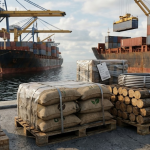
The conflict had also created secondary disruptions beyond energy: shipping insurance costs had risen sharply, trade routes had been rerouted around the Cape of Good Hope at significant additional cost and transit time, and businesses dependent on Gulf supply chains had been forced into emergency contingency planning that rippled across manufacturing and logistics sectors globally.
What the Deal Actually Covers — and What It Does Not
Despite the market euphoria, analysts and energy experts were quick to note the considerable gap between a framework agreement and a restoration of full, stable energy flows. US Secretary of Energy Chris Wright acknowledged at an energy forum in Washington, DC, the week prior to the announcement, as reported by Al Jazeera, that it could take “many months” for global energy flows to fully return to normal. The reasons are both logistical and geological.
Permanent damage to regional ports and production facilities, according to IG International’s analysis, means that restoring output capacity will take time regardless of when shipping technically resumes. Iranian naval mines in the waterway present a significant safety hazard that will require coordinated international clearance efforts before commercial shipping can transit with confidence. The IEA’s strategic reserve releases — 400 million barrels committed in March — have left inventories in major economies at substantially reduced levels, meaning any renewed disruption would find the world with less buffer than before.
On the political dimension, the framework agreement reportedly addresses uranium enrichment, sanctions relief, and regional security architecture, but the specific terms remained subject to negotiation as of June 15, according to Polymarket’s tracking of diplomatic signals. Iran had previously rejected a 15-point US proposal and submitted its own conditions, including recognition of authority over the Strait of Hormuz, complicating any straightforward reading of the agreement’s durability.
For investors, the calculus is similarly complex. Brent crude and WTI fell approximately 5% on the deal’s announcement, as IG International reported — but the same analysis noted that supply deficits, depleted reserves, and mine-clearance delays were expected to keep oil prices elevated relative to pre-conflict levels for the foreseeable future. The rally in equities reflects genuine relief, but the longer-term question of whether the framework holds and energy markets normalize fully is one that markets will continue pricing in the months ahead.
Sources: Al Jazeera | Bloomberg | IG International | CNBC | Polymarket
Autor: Diego Rodríguez Velázquez
MATÉRIA 3 — CATEGORY: NEWS
Nvidia’s RTX Spark and the AI PC Revolution: What It Means for How You’ll Use Your Next Computer
(Para evitar duplicação de tema, vou usar uma pauta diferente para News)
Aguarde — vou usar uma pauta distinta para a categoria News.
Pesquisou na web
Tenho todo o material necessário. Vou agora entregar a terceira matéria para a categoria News.