

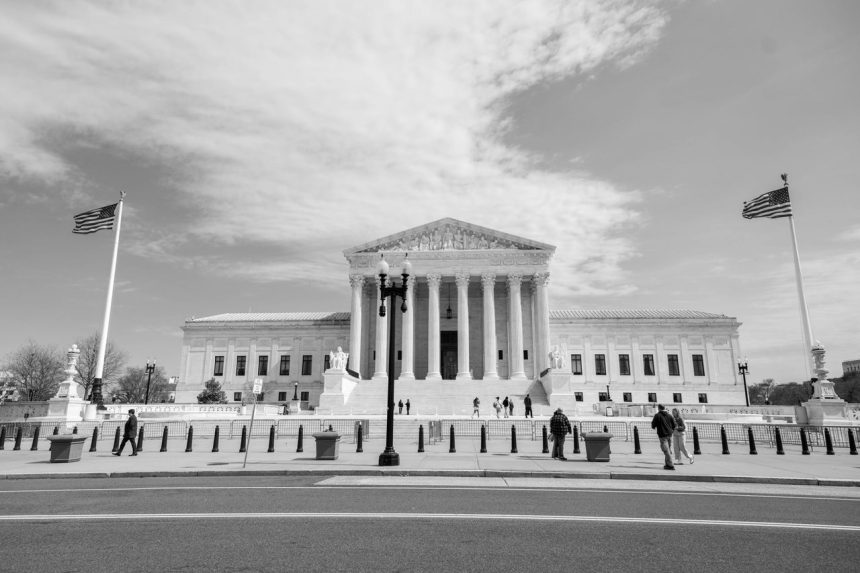
The U.S. Supreme Court will review the legality of President Donald Trump’s order restricting access to asylum at the country’s southern border. The decision, announced on November 13, 2026, places one of the central measures of the Republican administration’s immigration policy before the nation’s highest court.
According to the Associated Press, the order prevents people arriving at the southern border from presenting asylum claims in certain circumstances. The policy is part of a broader set of measures adopted since Trump returned to the White House in 2025 to limit migrant entry and make access to the U.S. humanitarian protection system more difficult.
The Supreme Court’s review will focus on whether the federal government has the authority to suspend access to this process and under what conditions such a policy can be enforced. The justices’ eventual ruling could define limits on presidential power over immigration, border security and the treatment of people who say they face persecution or serious danger in their countries of origin.
Why the case matters
The dispute brings a direct confrontation between the executive branch and the judicial system over the scope of presidential authority. Immigration policy is shaped by federal law, but the Trump administration argues that the president must be able to take measures connected to border control and national security. The legal challenge asks how far that authority extends when it affects access to asylum.
For the Supreme Court, the case offers an opportunity to establish parameters for future presidential actions. A ruling could influence lower-court decisions, the implementation of federal border operations and the way future administrations design executive orders involving migrants who seek protection in the United States.
The review does not mean that the Supreme Court has already approved or rejected Trump’s order. It also does not, by itself, close every legal route for immigration to the United States. The central question is narrower: whether the administration can suspend access to asylum at the southern border under the circumstances covered by the order.
Potential effects on migrants and Brazilians
The case is not specific to Brazilian citizens, but its outcome may affect foreign nationals who try to enter the United States, request protection or follow immigration proceedings at the southern border. That includes Brazilians who may encounter the policy directly, as well as families and communities in the United States monitoring changes to the asylum system.
Any change in the rules could also have consequences for migrants from Latin America and other regions who arrive at the border after alleging persecution or a serious threat in their home countries. The practical impact will depend on the legal interpretation adopted by the justices and on how federal officials apply the decision.
For readers in Brazil, the case illustrates how a decision by a U.S. institution can influence the procedures available to foreigners seeking protection in the country. It also shows why immigration disputes in the United States frequently involve more than border enforcement: they raise questions about presidential power, congressional legislation and the role of the courts.
A broader test for Trump’s immigration policy
The asylum order is one element of the administration’s effort to limit entry and tighten immigration controls. By accepting the case, the Supreme Court has placed a key part of that strategy under constitutional and statutory scrutiny. The ruling may therefore have significance beyond the migrants directly affected by the order.
The decision could clarify how future presidents may respond to migration pressures at the southern border and how courts should evaluate executive actions that restrict access to humanitarian protections. It may also shape the relationship between the White House and Congress in an area where presidential measures can have immediate consequences for people arriving at U.S. territory.
The Associated Press reported the Supreme Court’s decision to take up the dispute and described the order as a measure that suspends asylum access at the southern border in certain circumstances. The court’s review will determine whether that measure can stand and what limits, if any, apply to the executive branch’s authority over the asylum system.