
The White House has established a temporary exemption from certain Clean Water Act permitting requirements for federal wildfire suppression activities in the United States. The determination, published on November 10, 2026, applies to operations conducted by the U.S. Forest Service, the Department of the Interior and other federal agencies.
The measure is scheduled to remain in effect from November 10, 2026, through November 10, 2027. It includes the use, application and dispersal of fire retardant during firefighting operations, according to the White House presidential determination.
The administration presents the decision as a way to reduce regulatory delays during emergency responses and to preserve the operational tools available to federal wildfire crews ahead of the 2027 fire season. The policy places the speed of suppression efforts at the center of a broader debate over how the United States manages severe wildfires while protecting water resources.
What the exemption covers
The Clean Water Act is the main federal law governing the protection of water quality in the United States. The presidential determination concerns permitting requirements that could apply when firefighting activities or the use of retardant affect rivers, lakes, streams, aquifers and other waters.
By granting the exemption for the specified period, the federal government seeks to allow agencies to carry out wildfire suppression without waiting for the permits covered by the determination. The measure applies to federal activities rather than creating a general waiver for every firefighting operation in the country.
The document identifies the U.S. Forest Service and the Department of the Interior among the agencies covered by the decision. Those departments oversee substantial areas of federal land and coordinate responses to wildfires that can threaten communities, forests and public resources.
Administration cites court ruling and emergency response
The White House fact sheet says the action follows an adverse court decision involving the application of fire retardant. The administration argues that the ruling created a need to ensure that federal firefighters retain access to equipment and methods used in wildfire suppression.
According to the White House fact sheet, the determination is intended to advance wildfire suppression and support preparations for the next fire season. The document describes the policy as a response to operational and legal concerns surrounding the use of retardant from aircraft and other firefighting resources.
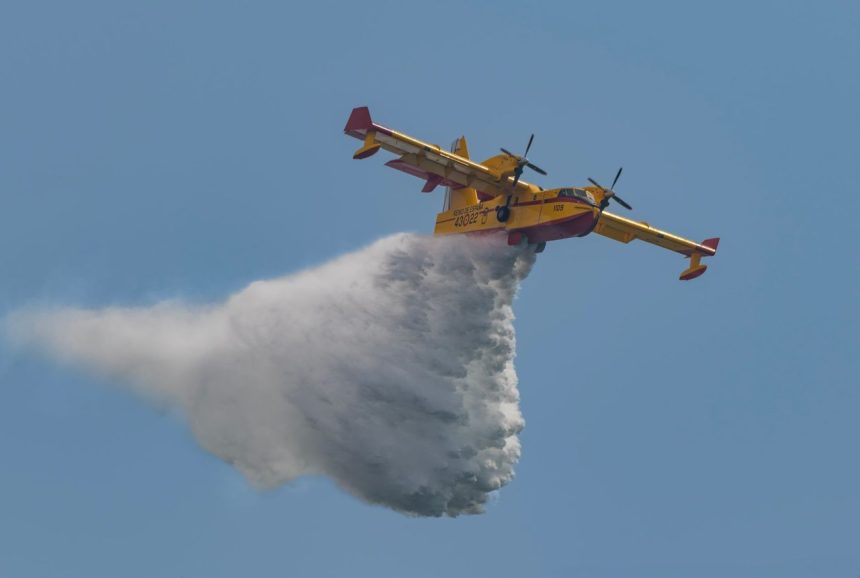
Aircraft-delivered retardant is used to slow the spread of flames and help create conditions for ground crews to contain a fire. Its use can bring firefighting operations into contact with protected waterways, which is why permitting and environmental safeguards have become part of the policy dispute.
Environmental rules remain part of the framework
The exemption does not remove every environmental obligation connected to federal wildfire operations. The presidential determination states that other legal requirements continue to apply to the activities covered by the decision.
That distinction is central to the measure. The administration is suspending certain Clean Water Act permitting requirements for a limited period, but it is not presenting the action as a complete suspension of environmental law. Agencies must therefore continue to operate under the other requirements that remain applicable to their work.
The policy reflects a conflict between two public objectives. One is the need to move quickly when wildfires threaten people, property and ecosystems. The other is the responsibility to prevent firefighting substances and activities from causing unnecessary damage to water supplies and aquatic environments.
Why the decision matters beyond federal agencies
For Americans living near federal forests and other public lands, the decision could shape how quickly federal crews deploy aircraft, retardant and related suppression resources during the period covered by the determination. It also gives environmental groups, local authorities and communities a clear federal policy to scrutinize as wildfire operations continue.
The issue may also interest Brazilian readers who follow U.S. responses to extreme wildfire conditions and debates over the balance between emergency action and environmental protection. The United States’ approach can serve as an important reference point in discussions about public lands, water security and the regulation of firefighting tools.
The determination was signed by President Donald Trump and is limited to the period ending November 10, 2027. Its immediate focus is federal wildfire suppression, but its effects will be measured against both operational performance and the continued protection of water resources under the remaining environmental rules.