

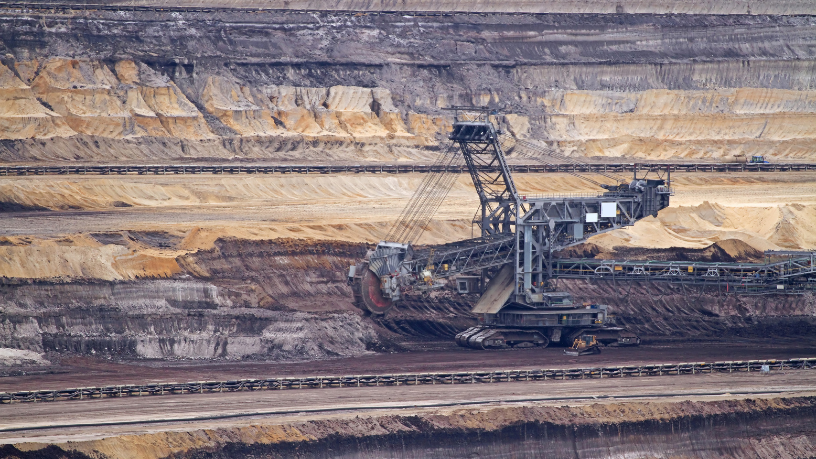
Anglo American’s decision to divest its Australian metallurgical coal operations for approximately 3.9 billion dollars marks a significant step in the broader restructuring of the global mining industry. Rather than being a simple financial transaction, the move reflects a structural shift in how major mining companies are reshaping their portfolios amid energy transition pressures and the evolving role of coal in industrial supply chains.
This article examines the strategic meaning of the sale, its impact on the global metallurgical coal market, the decarbonization trends influencing corporate decisions, and how this type of move signals a wider transformation in the commodities sector.
The role of metallurgical coal in the global economy
Metallurgical coal, also known as coking coal, remains an essential input in steel production across much of the world. Despite advances in cleaner technologies such as hydrogen-based direct reduced iron processes, the transition away from coal is still gradual and depends heavily on cost structures, infrastructure readiness, and energy availability.
Australia plays a strategic role in this market as one of the world’s largest exporters of metallurgical coal. Anglo American’s presence in the country has long been tied to strong global demand, particularly from industrialized and emerging economies that continue to rely heavily on steel production.
The divestment, therefore, does not signal an exit from an irrelevant sector, but rather a reallocation of capital away from an industry that remains economically significant yet increasingly uncertain in the long term.
Corporate strategy and the pressure of energy transition
In recent years, major mining companies have increasingly reassessed their asset portfolios based on criteria that go beyond immediate profitability. Environmental, social, and governance factors have gained substantial weight in strategic decisions, especially for publicly listed firms exposed to institutional investors.
Anglo American’s exit from its Australian metallurgical coal business fits into this broader restructuring trend. Instead of maintaining high-carbon assets, the company is focusing on minerals considered critical to the energy transition, such as copper and nickel, which are essential for electrification, power grids, and clean energy technologies.
This shift does not eliminate global dependence on fossil fuels in the short term, but it does reframe corporate priorities in anticipation of a gradual decarbonization pathway. In practice, it represents a risk management strategy aligned with expectations that coal-linked assets may face increasing regulatory pressure and volatility in the decades ahead.
Market valuation and investor interpretation
The approximately 3.9 billion dollar valuation attached to the divested operations reflects not only asset performance but also broader sector conditions. The metallurgical coal market continues to be shaped by cyclical steel demand, particularly in Asia, while simultaneously facing mounting pressure from global climate policies.
For investors, such transactions are often interpreted as a signal of capital discipline. By divesting assets considered less aligned with long-term strategy, the company frees up resources for areas with higher growth potential and lower regulatory risk.
However, there is an ongoing debate regarding the pace of this transition. Some market participants argue that metallurgical coal demand may remain strong for longer than projected in certain decarbonization scenarios, raising the possibility that early exits could represent missed short-term opportunities.
Impacts on the mining sector and the steel supply chain
The restructuring of major players like Anglo American directly influences industry dynamics. Moves of this scale often encourage other companies to reassess their portfolios and accelerate similar decisions, particularly regarding carbon-intensive assets.
In the steel sector, the shift reinforces a dual pressure. On one hand, there is a need to ensure stable metallurgical coal supply to sustain global steel production. On the other, there is increasing demand for lower-emission solutions, driving investment into new technologies and cleaner industrial processes.
Balancing supply security with energy transition remains one of the central challenges of the global industrial economy.
A shift that goes beyond asset sales
Anglo American’s exit from the Australian coal business should not be viewed merely as an isolated financial operation. It reflects a broader shift in value creation logic within global mining, where sustainability, regulatory pressure, and market expectations are becoming as influential as commodity prices.
This movement suggests that the sector is entering a phase in which operational efficiency and alignment with the energy transition will define competitiveness. Even though coal continues to play a central role in global industry, its position within corporate portfolios is becoming increasingly selective.
Looking ahead, mining is expected to become more concentrated in critical minerals and less dependent on traditional fossil fuels, reshaping not only corporate strategies but also the broader industrial chain connected to steel and energy.
Autor: Diego Velázquez