

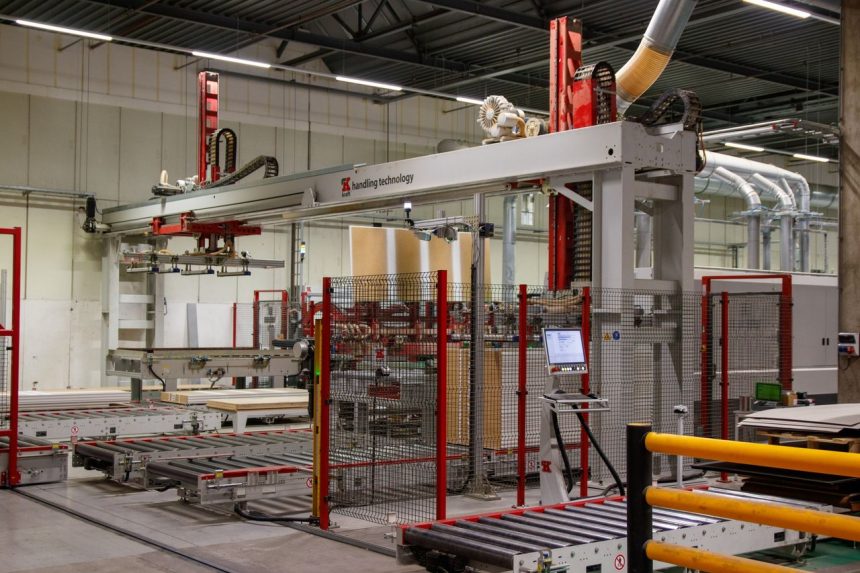
The White House has moved to adjust U.S. imports of robotics, industrial machinery and related parts, placing automation equipment at the center of President Donald Trump’s economic and industrial agenda. The measure is described in a presidential proclamation dated October 28, 2026, and could affect manufacturers, importers and international suppliers connected to industrial production.
The announcement does not, by itself, provide enough information to determine the exact financial impact on each product category. Details such as tariff rates, covered items, exclusions and implementation deadlines depend on the full text of the proclamation and any related instructions issued by U.S. authorities. Those points will be decisive for companies planning shipments to the American market.
According to the White House proclamation, the action concerns robotics, industrial machinery and their parts and components entering the United States. The measure forms part of a broader effort by the administration to strengthen domestic production and review the country’s dependence on foreign industrial supply chains.
What the proclamation may change
The central issue for businesses is whether the measure introduces new tariffs, modifies existing import treatment or establishes another form of control over selected products. The available description identifies the sectors covered, but it does not state the applicable rates or list every item that may be included.
That distinction matters because industrial equipment is commonly sold through complex international supply chains. A single production system can involve machinery, sensors, electronic controls, metal components and specialized software or hardware sourced from different countries. Any change affecting one part of that chain could alter costs, delivery schedules and decisions about where equipment is assembled.
The White House’s official proclamations page places the action within the administration’s formal presidential measures. However, the public announcement alone does not establish whether all robotics imports will face the same treatment or whether exemptions will apply to specific industries, trading partners or products.
Why the decision matters to U.S. industry
Robotics and industrial machinery are directly linked to factory modernization, warehouse operations and the expansion of automated production. Companies that rely on imported equipment may face higher acquisition costs if new duties are imposed. Domestic manufacturers, on the other hand, could benefit from reduced competition or increased demand if the policy encourages buyers to source more equipment from U.S. suppliers.
The outcome will depend on how the measure is implemented. Protection for domestic producers can support investment in American manufacturing, but restrictions on imported machinery may also raise expenses for factories that need foreign equipment to expand capacity. Businesses will therefore need to assess not only the products named in the proclamation, but also the timing of any changes and the agencies responsible for enforcement.
The action also reflects a wider international competition for production capacity. Governments are seeking to attract factories, secure strategic technologies and reduce vulnerabilities in supply chains. Robotics has become particularly important because it can increase productivity while helping companies respond to labor shortages and changing patterns of global trade.
Potential implications for Brazilian companies
Brazilian exporters could be affected if they sell machinery, automation systems, metal parts or other industrial components to customers in the United States. At this stage, however, the available official information does not establish a specific impact on Brazilian products or identify Brazil as a country subject to special treatment.
For Brazilian businesses, the immediate priority is to compare their products with the classifications eventually used by U.S. customs authorities. Exporters and importers will also need to verify whether contracts signed before the effective date receive transitional treatment and whether components shipped as part of larger systems are covered separately.
The measure may also influence investment decisions. Companies evaluating new factories, distribution centers or automation projects in the United States could reassess the cost of imported equipment and the advantages of working with domestic suppliers. Any effect on Brazilian manufacturers will depend on the final rules, the product scope and the response of U.S. buyers.
Next steps for companies and consumers
The most important next step is the publication and review of the complete implementation details. Businesses will be watching for product lists, tariff schedules, exemptions, effective dates and guidance from the relevant U.S. agencies. Without those details, it is not possible to calculate the measure’s precise effect on individual shipments.
For now, the proclamation signals a stronger role for trade policy in the United States’ industrial strategy. Its practical consequences will become clearer only after the administration defines how robotics, industrial machinery and their components are to be treated at the border.