

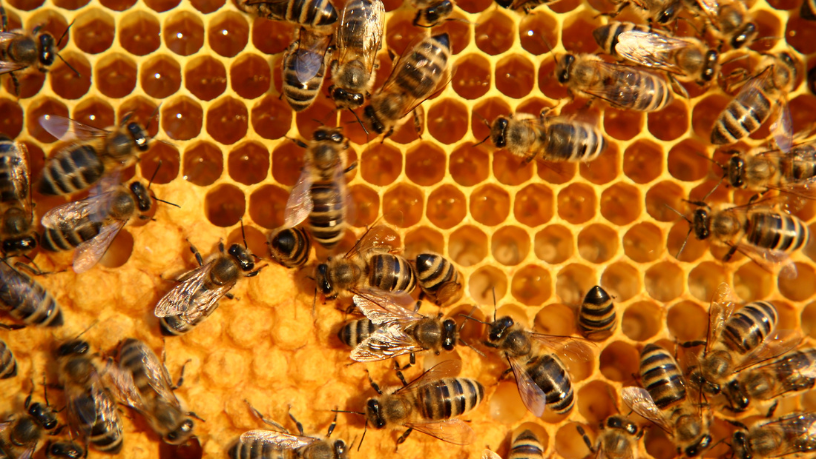
In recent observations in Canada, researchers have documented an extraordinary behavior among honeybee colonies, where worker bees challenge the authority of their queens. This phenomenon, rare and complex, reveals new dimensions of social dynamics in insect societies. Scientists note that such uprisings are not merely random acts of aggression, but a structured response to environmental pressures and internal colony conditions. By studying these patterns, experts hope to understand the balance between individual initiative and collective harmony within hives, shedding light on broader ecological interactions.
The rebellion among worker bees appears to be triggered by subtle changes in the colony’s environment or the perceived fitness of the queen. When the queen fails to maintain adequate pheromone signals or the colony experiences stress, the workers may take unprecedented measures to protect the survival and productivity of the hive. Observing this behavior helps entomologists grasp the adaptive strategies that social insects employ to ensure continuity. The interplay between obedience and revolt within these tiny societies challenges previously held notions about rigid hierarchies in nature.
Researchers in Canada have emphasized that these uprisings involve coordinated action, not chaotic aggression. Worker bees display sophisticated communication and collective decision-making, indicating a remarkable level of intelligence and social cohesion. The mechanisms behind these behaviors are still under study, but initial findings suggest that chemical signaling and social feedback loops play a central role. Understanding these dynamics offers potential applications in biology, ecology, and even robotics, where decentralized decision-making can be inspired by natural systems.
The implications of worker bee revolts extend beyond the colonies themselves. Such behaviors may affect pollination patterns, ecosystem balance, and even agricultural productivity. When colonies reorganize internally, it can influence foraging efficiency and adaptability to environmental shifts. By studying these events, scientists gain insights into the resilience of pollinator populations, which are critical for both natural habitats and human food systems. The phenomenon highlights the intricate link between individual behaviors and collective outcomes.
Moreover, the Canadian cases have revealed that worker bees sometimes replace their queens through cooperative effort, ensuring the continuation of the colony. This process, while seemingly rebellious, ultimately supports the long-term stability of the hive. The intricate balance between challenge and cooperation demonstrates that revolt is not destructive by nature, but a strategic adaptation. These findings challenge simplistic interpretations of insect hierarchies and suggest that social structures are more fluid and responsive than previously assumed.
Observations also suggest that external pressures, such as temperature changes or food scarcity, may intensify the likelihood of worker uprisings. Colonies under stress appear more likely to engage in collective decision-making to replace ineffective leadership. Such behavior indicates that survival strategies in insects are highly context-dependent, influenced by both internal signals and environmental cues. These insights contribute to a more nuanced understanding of social evolution and behavioral ecology.
The study of these rebellions highlights the importance of long-term monitoring and detailed field research. Scientists emphasize that capturing the subtle shifts in behavior requires patience, advanced tracking techniques, and careful documentation. By continuously observing colonies, researchers can map out the conditions that trigger revolts and the sequences of actions that follow. This methodical approach ensures that interpretations of bee behavior are accurate, avoiding assumptions based solely on anecdotal evidence or short-term observations.
In conclusion, the revolt of worker bees against queens in Canadian hives reveals a fascinating interplay between cooperation, conflict, and adaptation in nature. It demonstrates that social structures are dynamic and responsive, with individuals capable of strategic action to ensure collective welfare. These findings not only deepen our understanding of insect behavior but also provide analogies for resilience, decision-making, and adaptability in complex systems. The Canadian cases serve as a reminder that even the smallest creatures exhibit intelligence and social sophistication that continues to surprise and inspire scientists worldwide.
Autor: Bergezin Vuc